Skip to main content
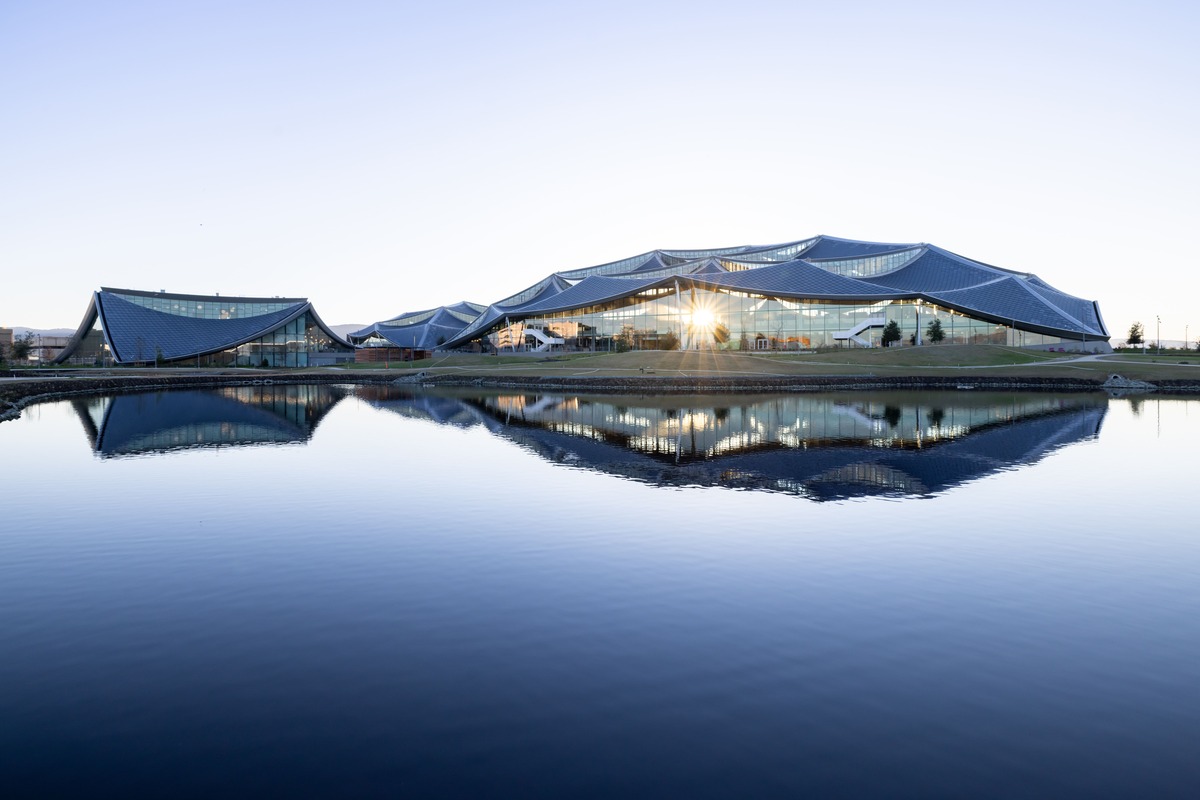
The energy transition is not only changing how we produce energy — it is also transforming the way we design buildings. More and more new constructions and renovations rely on photovoltaics to generate energy directly on-site. But as solar adoption increases, a key question emerges:
How can photovoltaics become part of architecture — instead of appearing as a technical add-on?
For architects, developers, and investors, this question is becoming increasingly important. Buildings are no longer expected to only consume energy — they must also produce it.
This is where the concept of the solar roof with integrated photovoltaics comes into play. Instead of installing solar panels on top of a roof, the roof itself becomes an energy-generating architectural element.
What Is a Solar Roof?
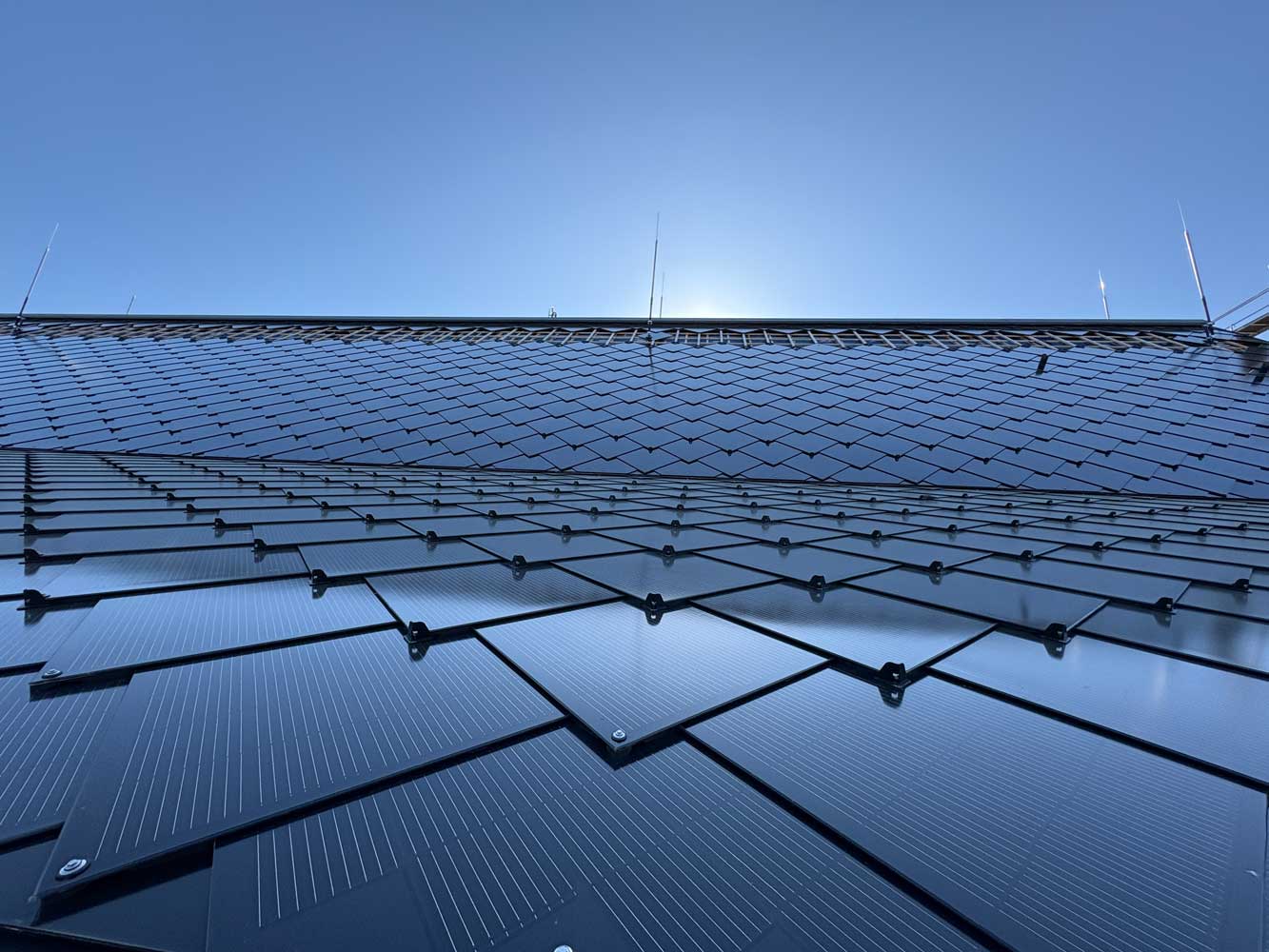
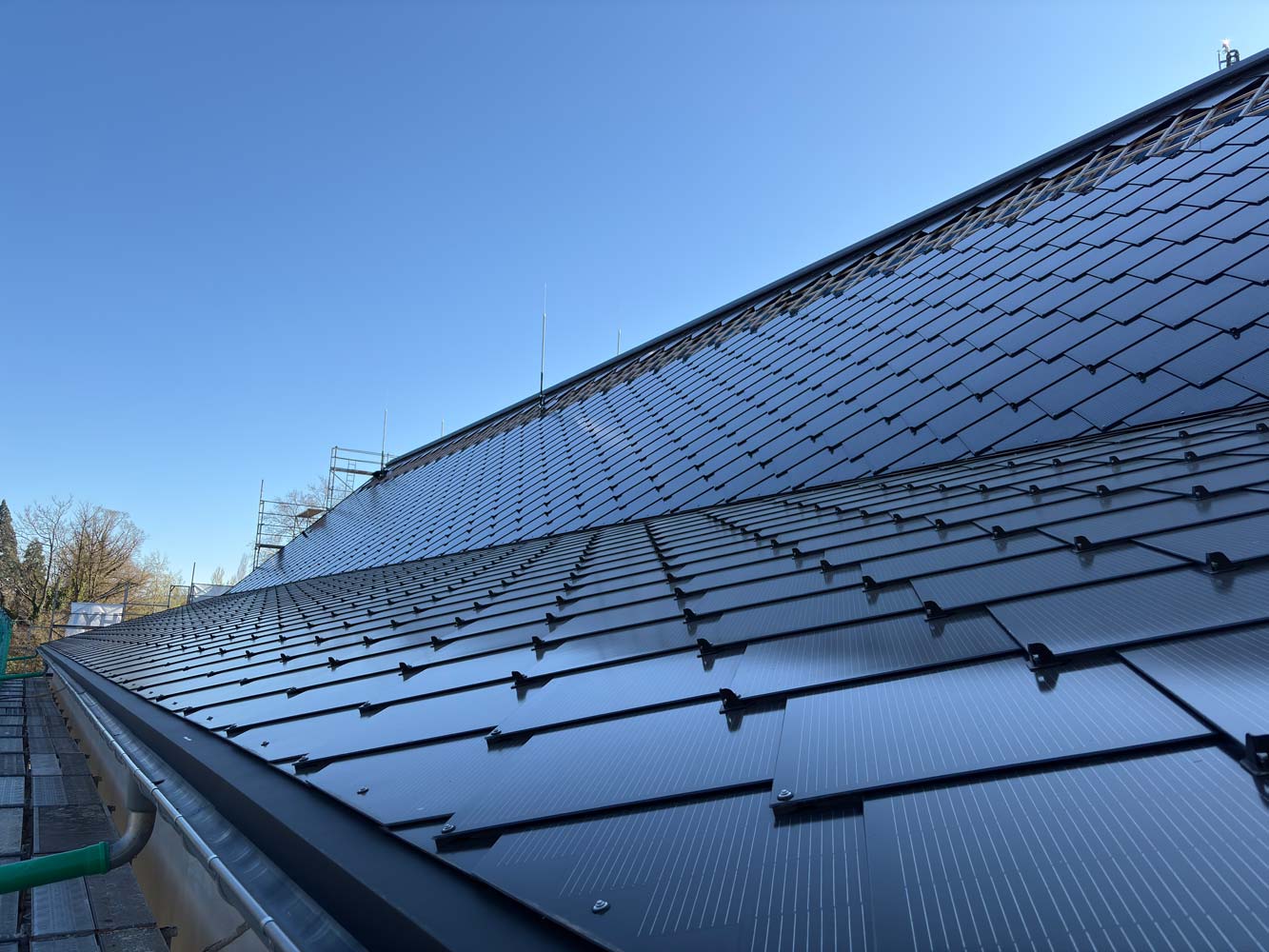
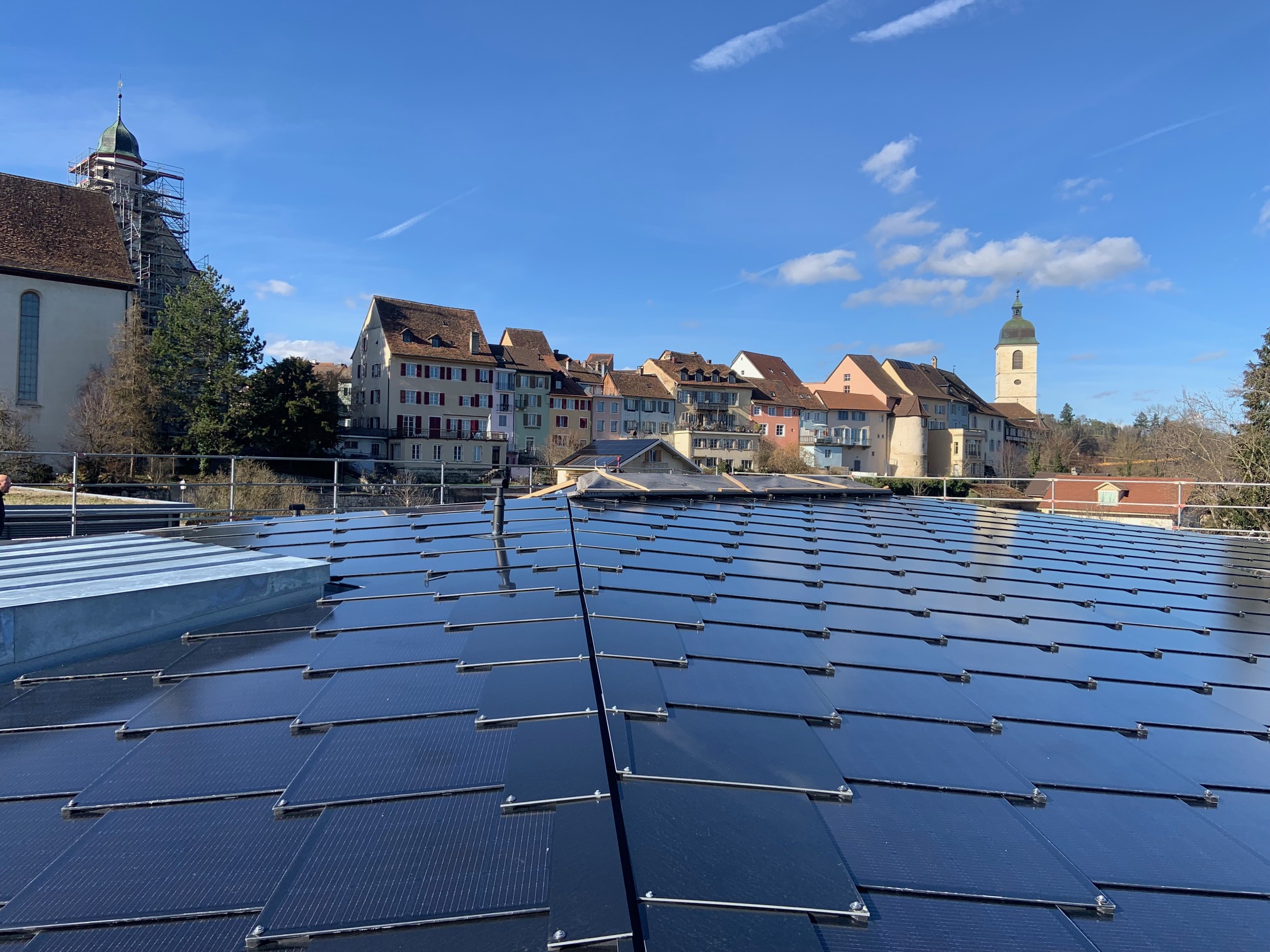
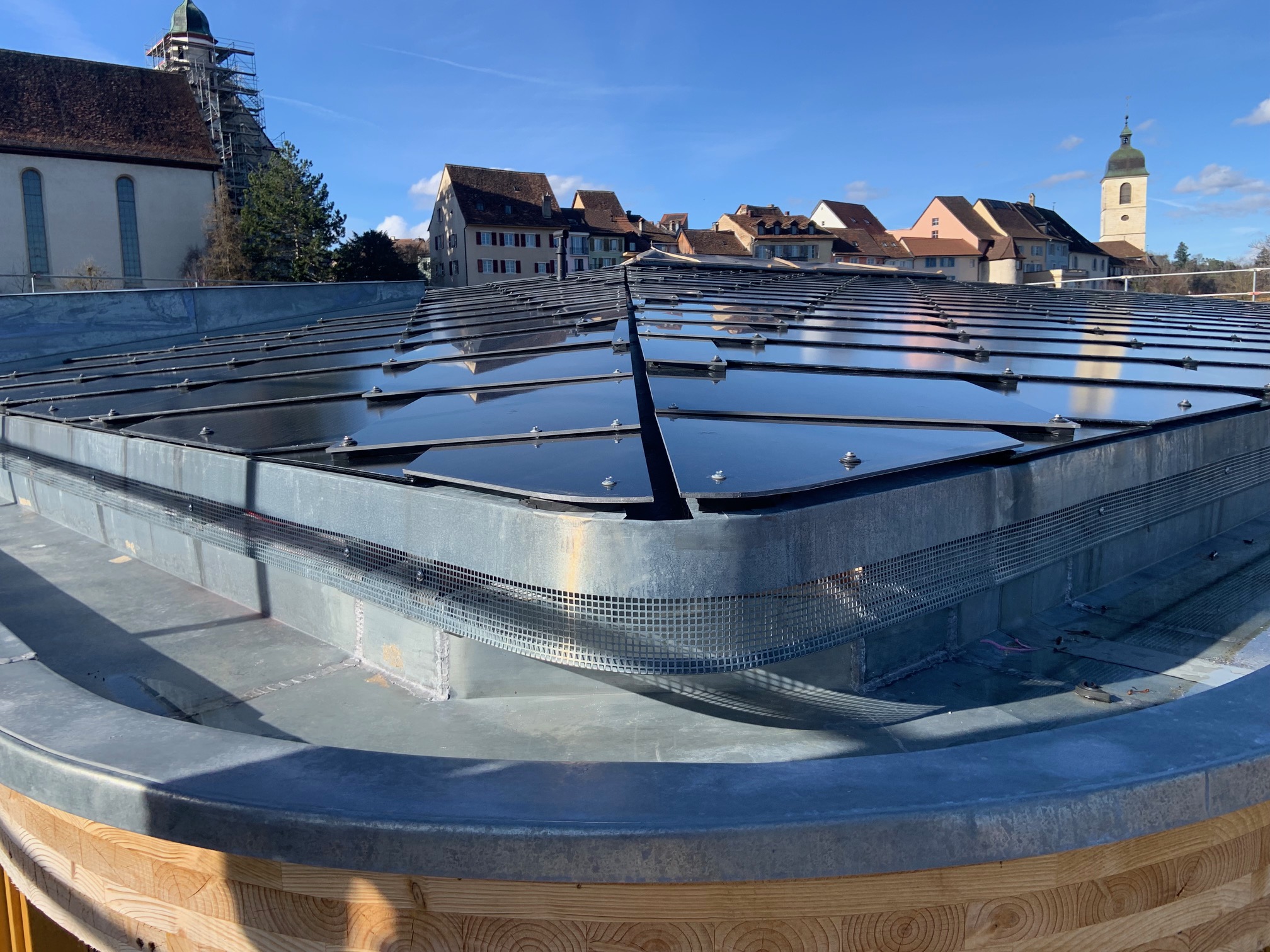
A solar roof is a roof where photovoltaic elements are fully integrated into the building envelope. Unlike traditional rooftop solar systems, the photovoltaic components replace parts of the roof covering instead of being mounted on top. This allows a solar roof to combine energy production, weather protection, and architectural design in a single system.
This approach is commonly referred to as integrated photovoltaics or building-integrated photovoltaics (BIPV).
Why Photovoltaics are an Architectural Challenge
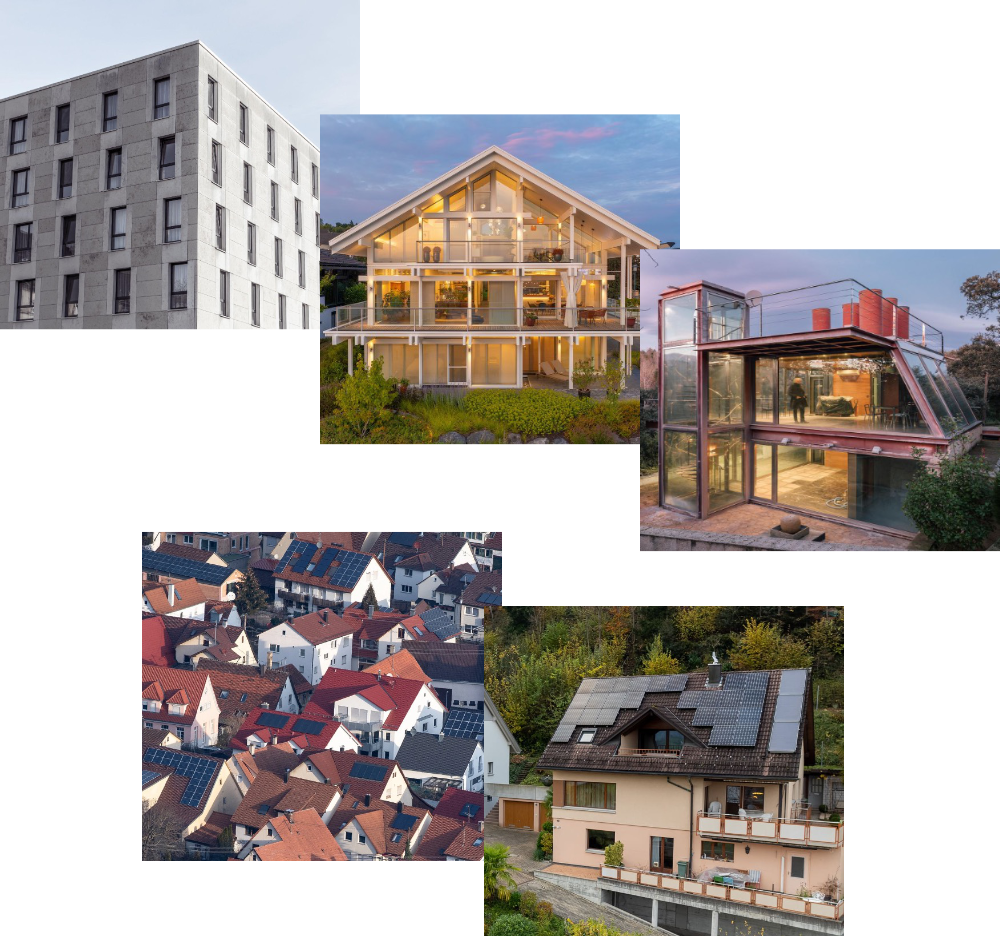
Architecture is based on clear design principles. Facades follow a structure, materials are carefully selected, and proportions are deliberately designed. Traditional solar panels often disrupt this logic. They are typically installed after the building is completed — regardless of roof geometry, materials, or visual composition.
The result is often:
- fragmented roof surfaces
- visible panel grids
- compromised architectural quality
This is particularly problematic in:
- high-end residential projects
- public buildings
- historical or sensitive urban environments
The energy transition is therefore not just a technical challenge — it is also a design challenge.
From Solar Panels to Building Materials: Integrated Photovoltaics
A new generation of solutions is redefining photovoltaics: integrated photovoltaics.
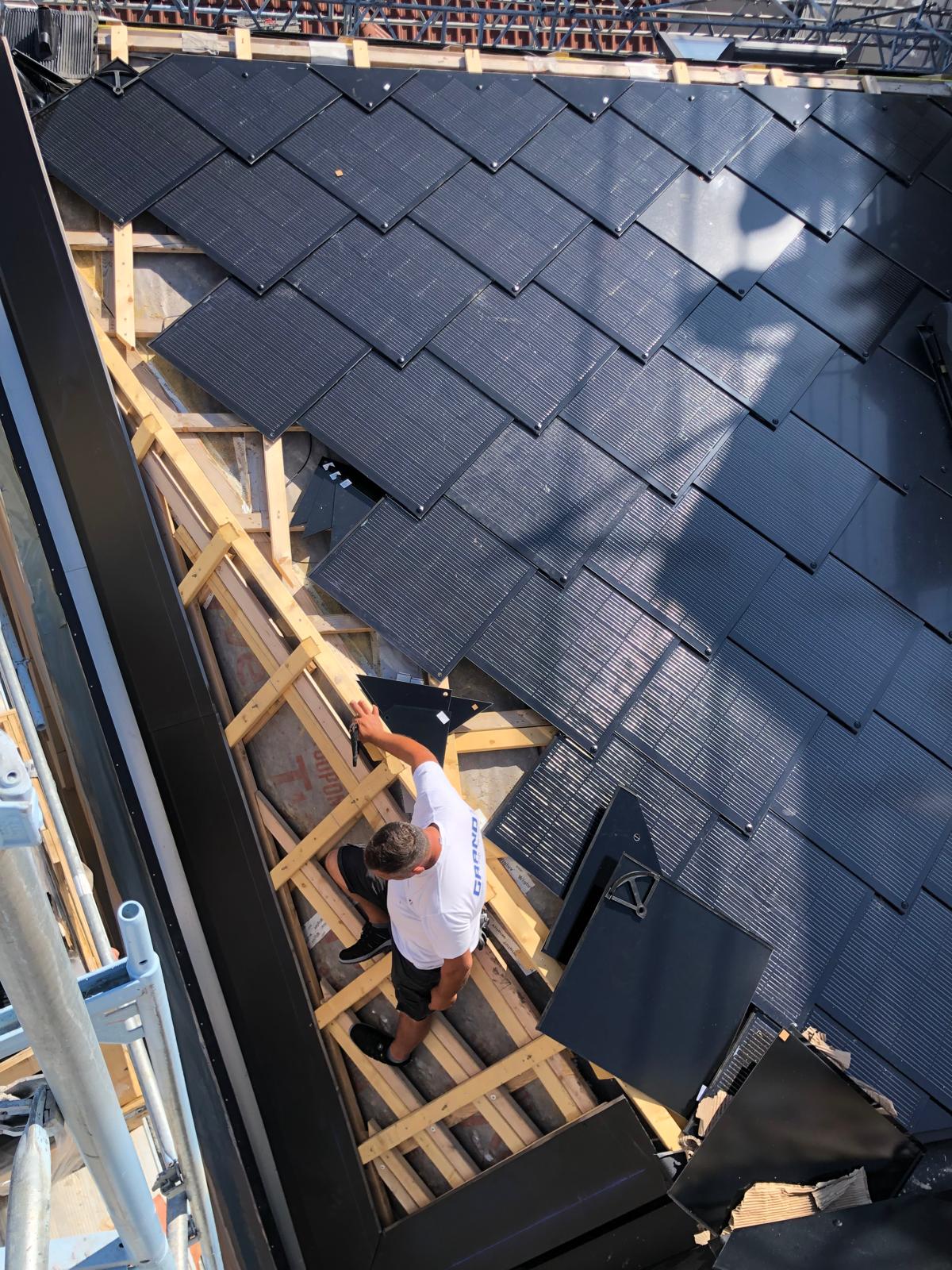
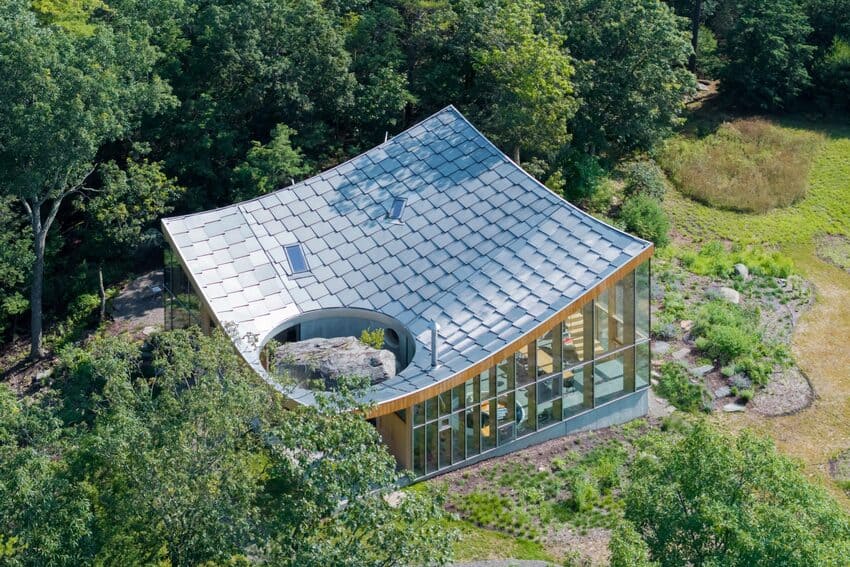
With this approach, solar technology becomes part of the building envelope itself. A solar roof with integrated photovoltaics replaces conventional roofing materials and performs multiple functions:
- weather protection
- architectural expression
- energy generation
Photovoltaics become a building material.
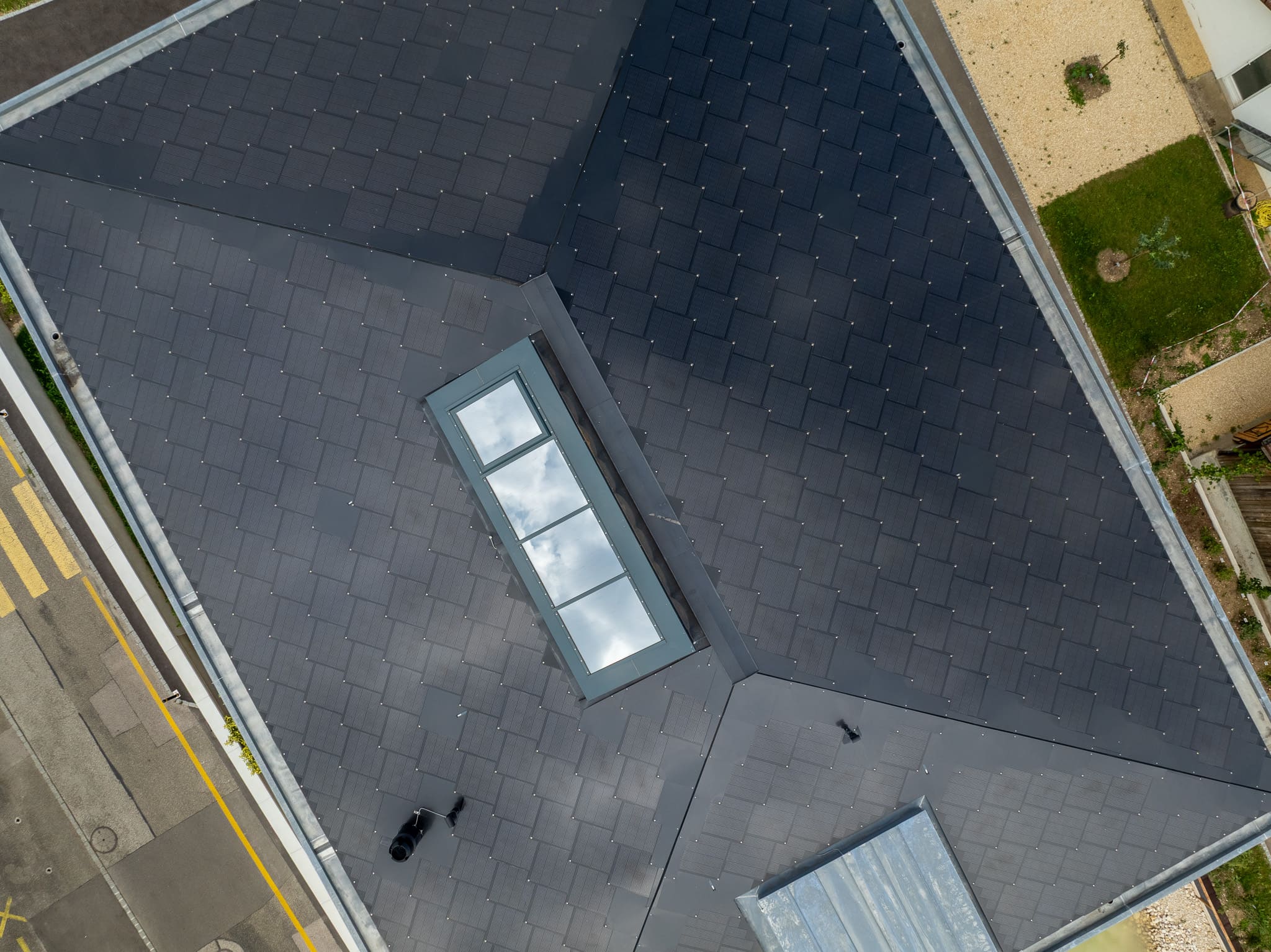
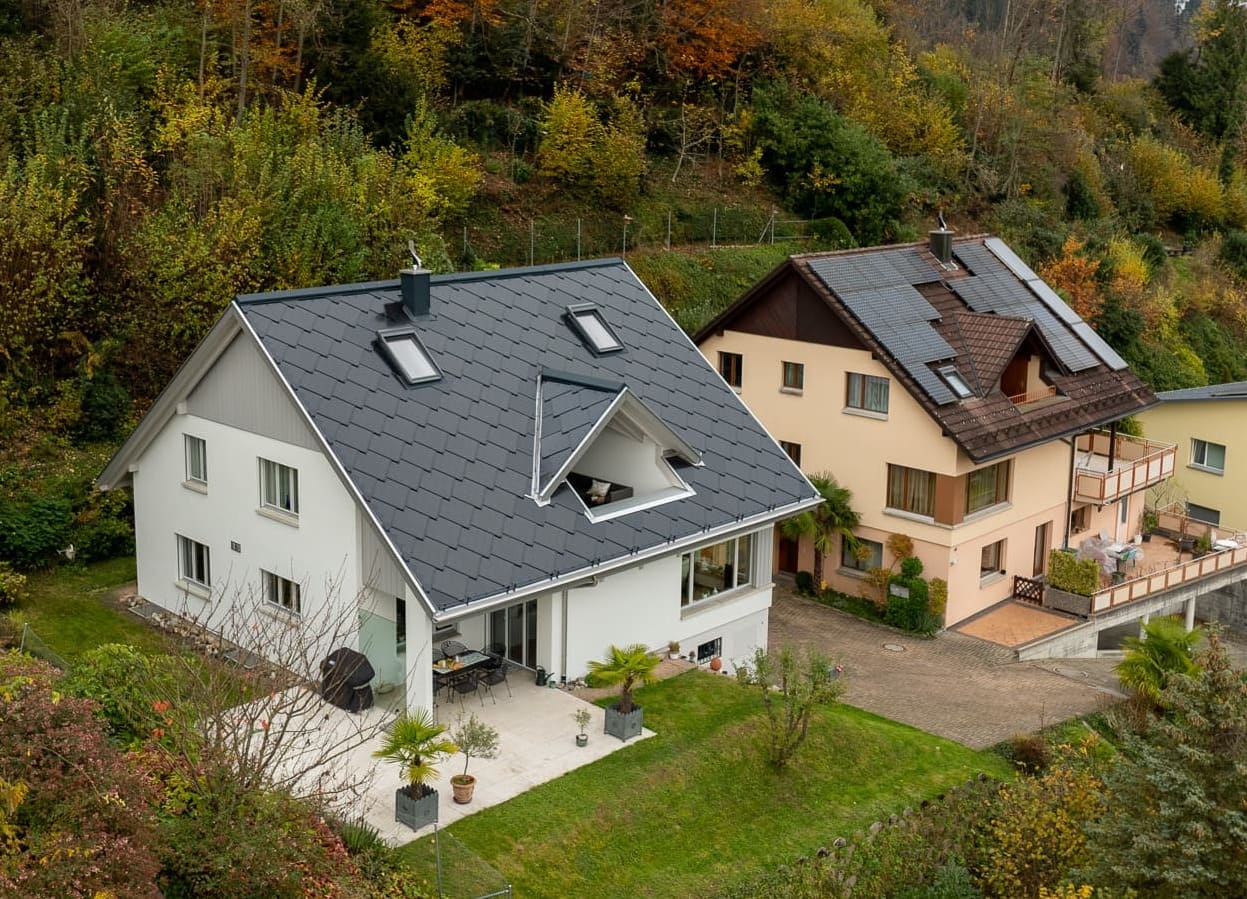
This enables architects to design clean, homogeneous roof surfaces without visible solar panels. Especially in complex roof geometries, a BIPV roof system offers far greater flexibility than conventional installations.
Learn more about integrated photovoltaic solutions here.
The Roof as the Fifth Facade
Traditionally, the roof has been treated as a purely functional element. However, modern urban development is changing this perspective.
With increasing urban density, sloped terrains, and aerial viewpoints, roofs are more visible than ever.
Many architects now refer to the roof as the “fifth facade.”
If the roof is part of the architectural expression, then energy production must also be integrated into the design.
A solar roof allows exactly that — transforming energy production into an architectural feature.
Real-World Examples of Solar Roof Architecture
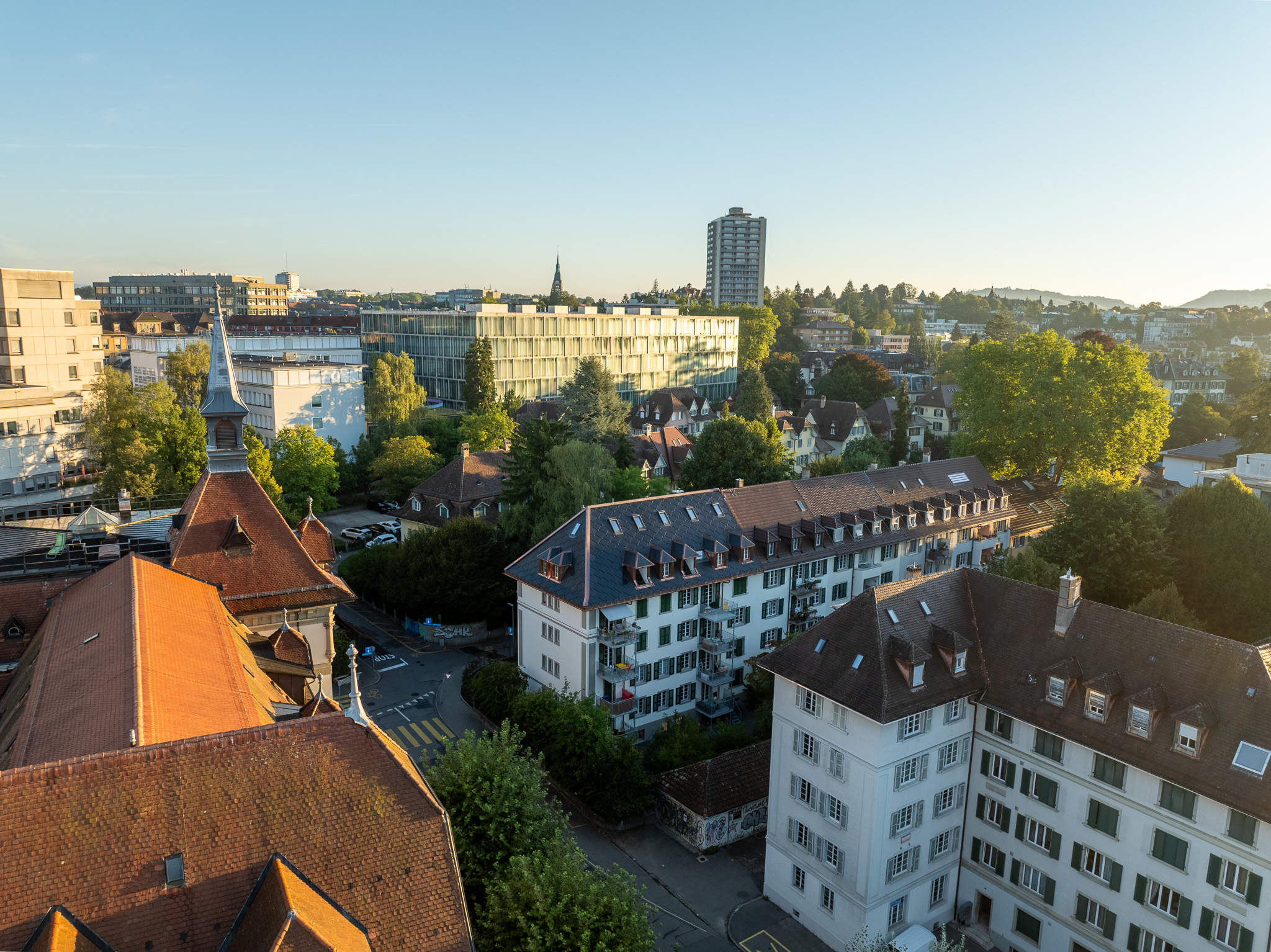
Integrated photovoltaics are no longer theoretical — they are already being used in real projects across Europe.
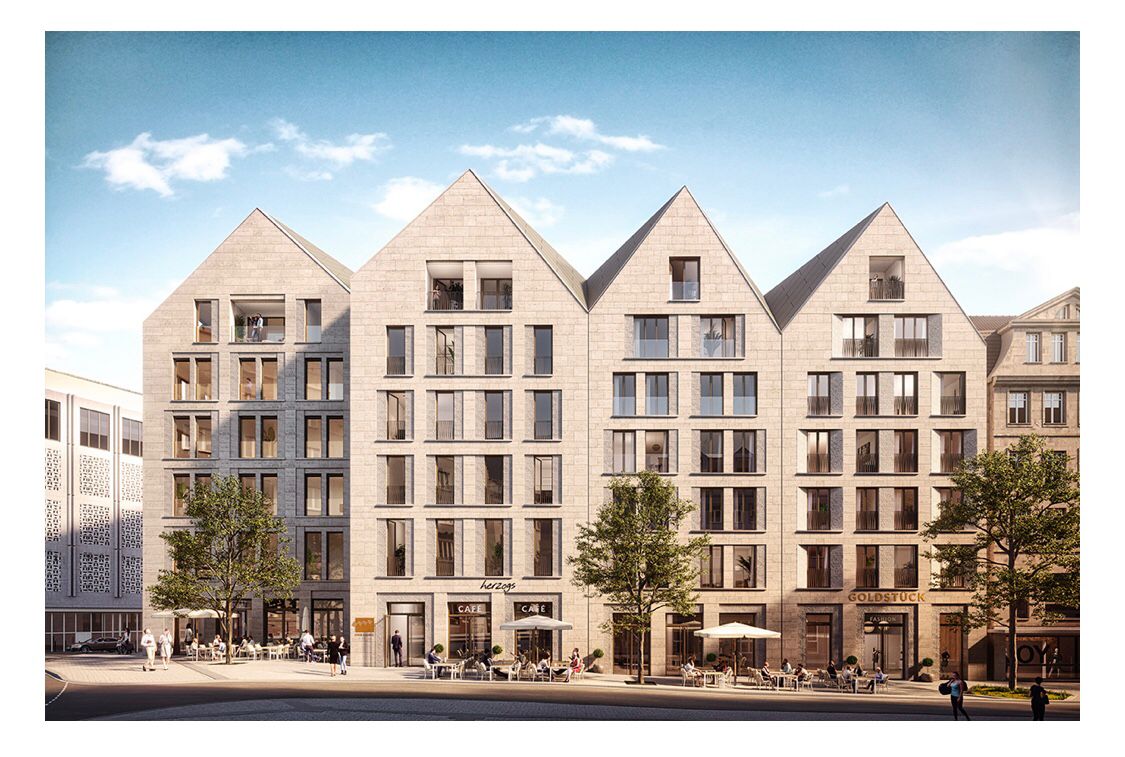
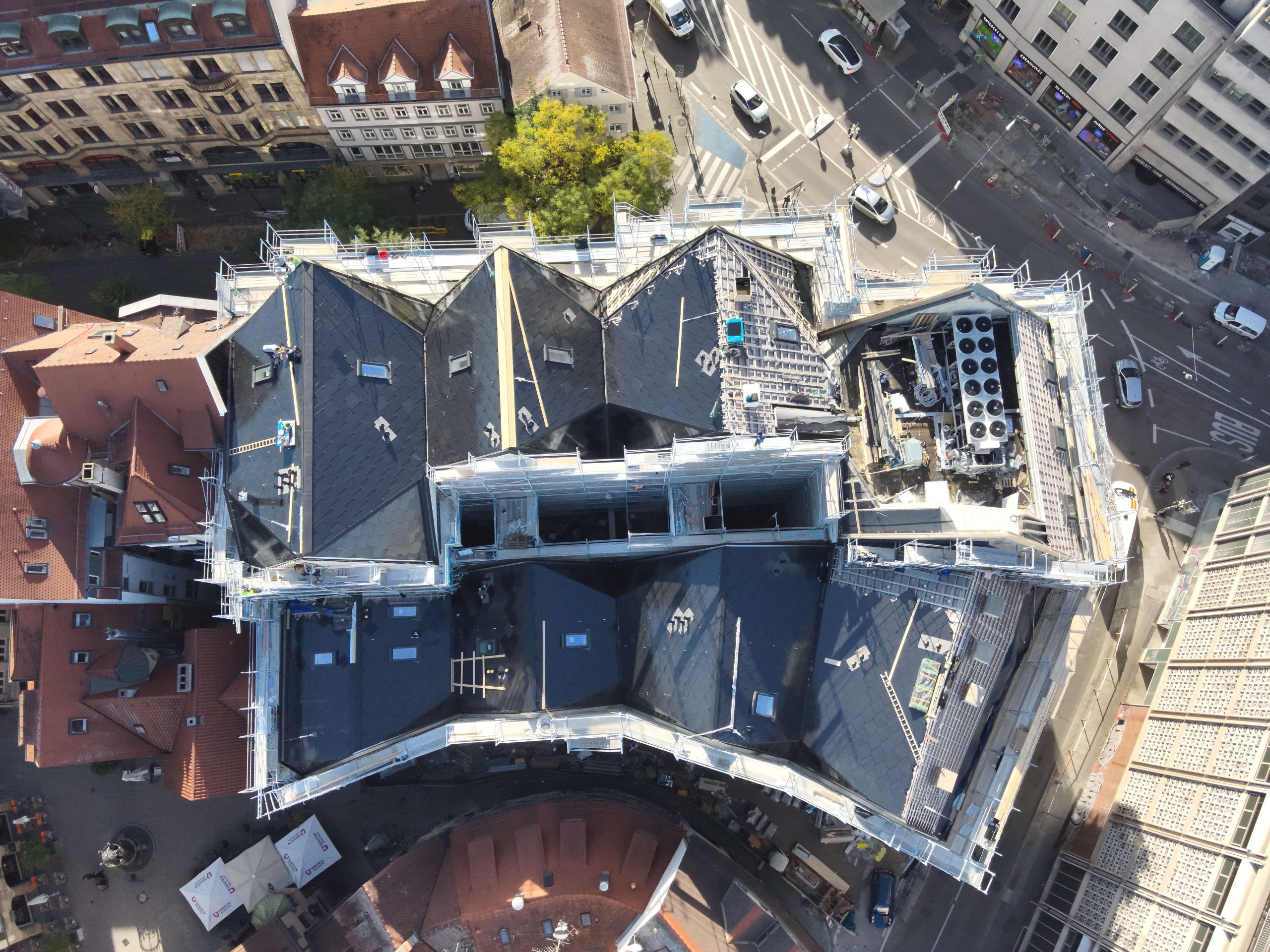
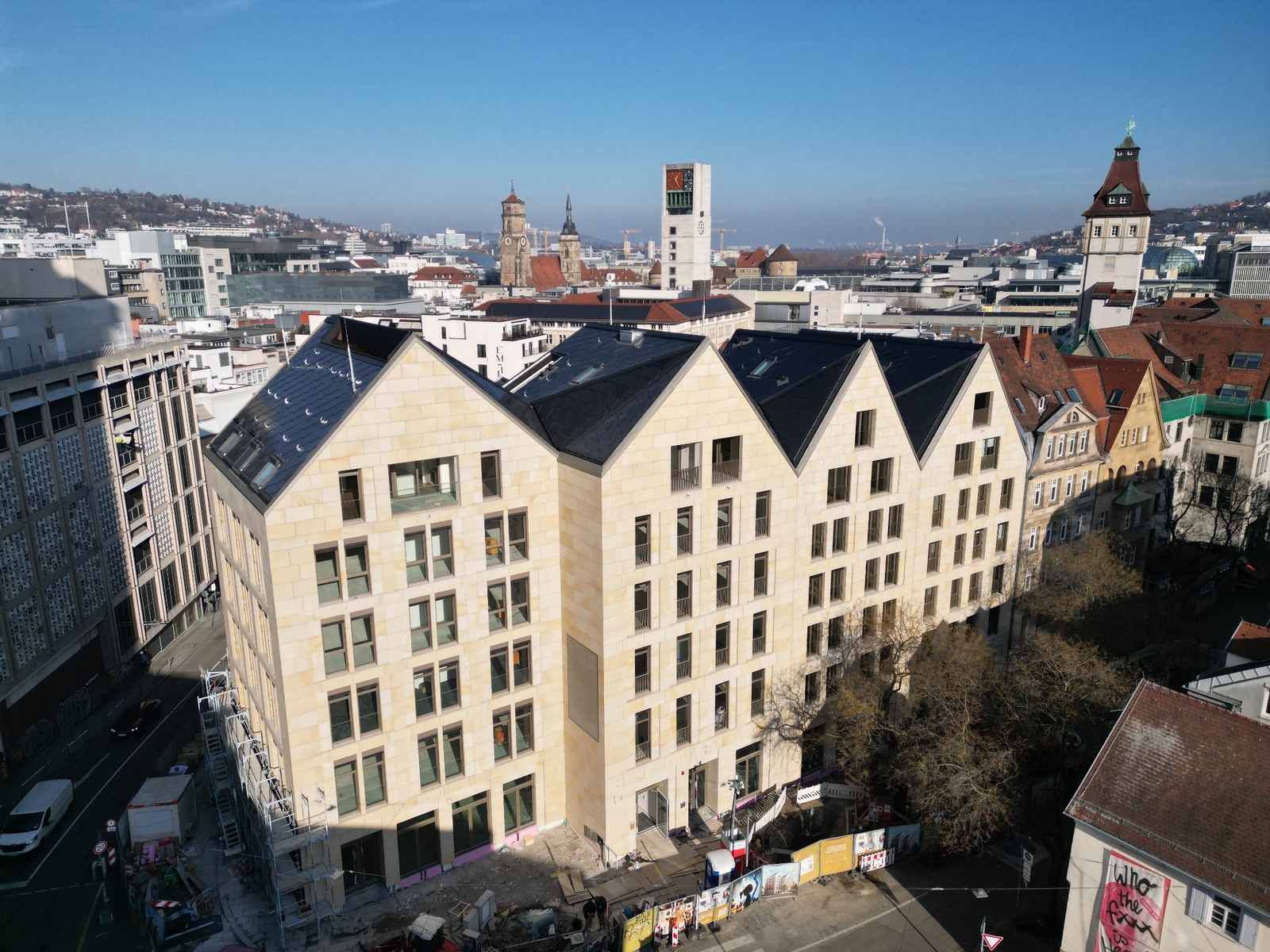
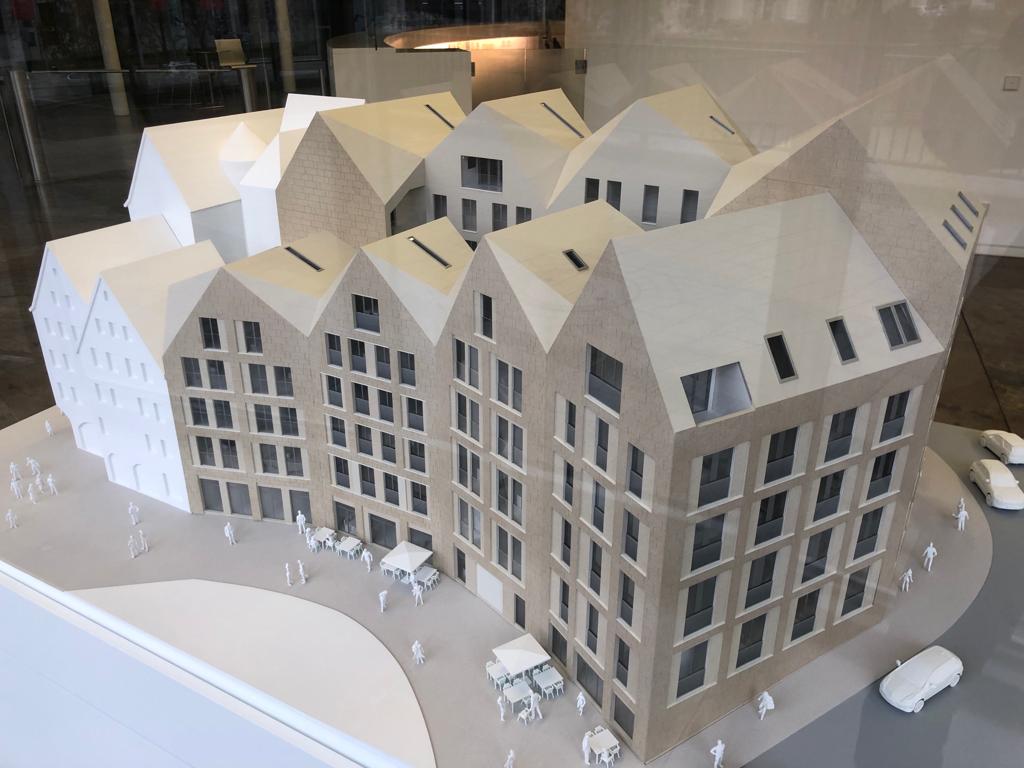
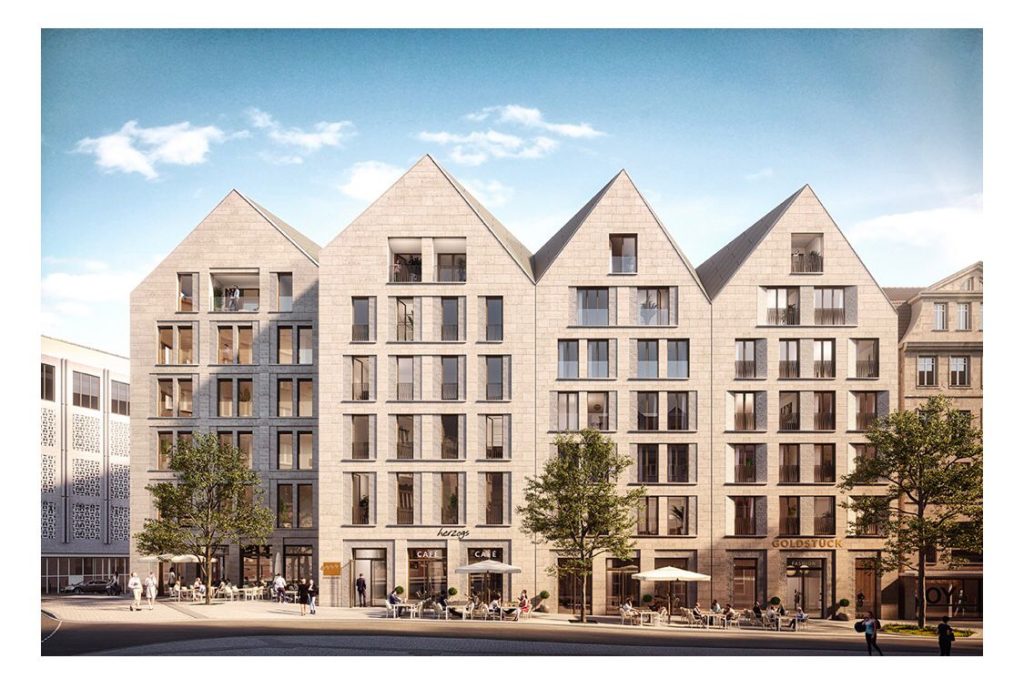
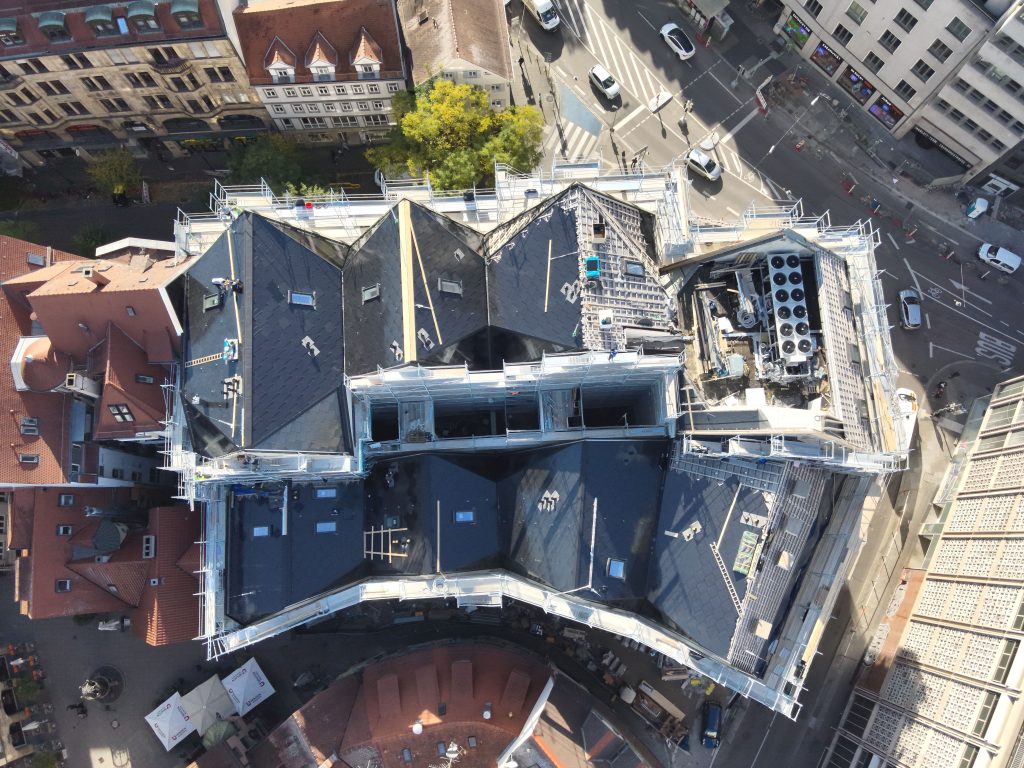
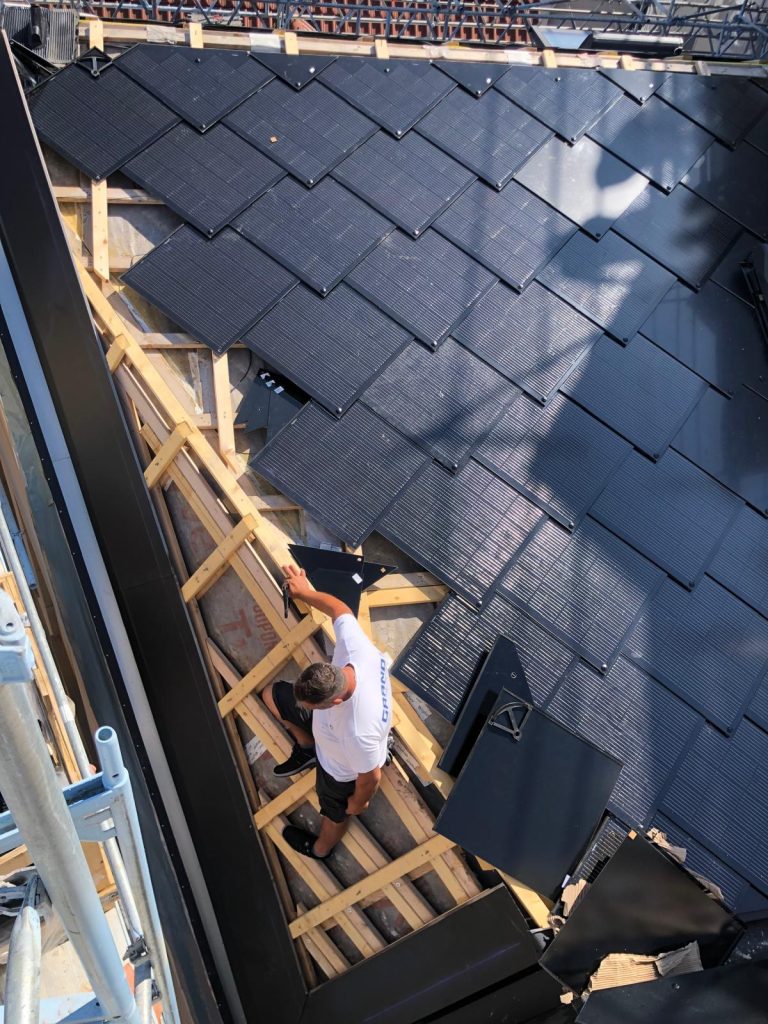
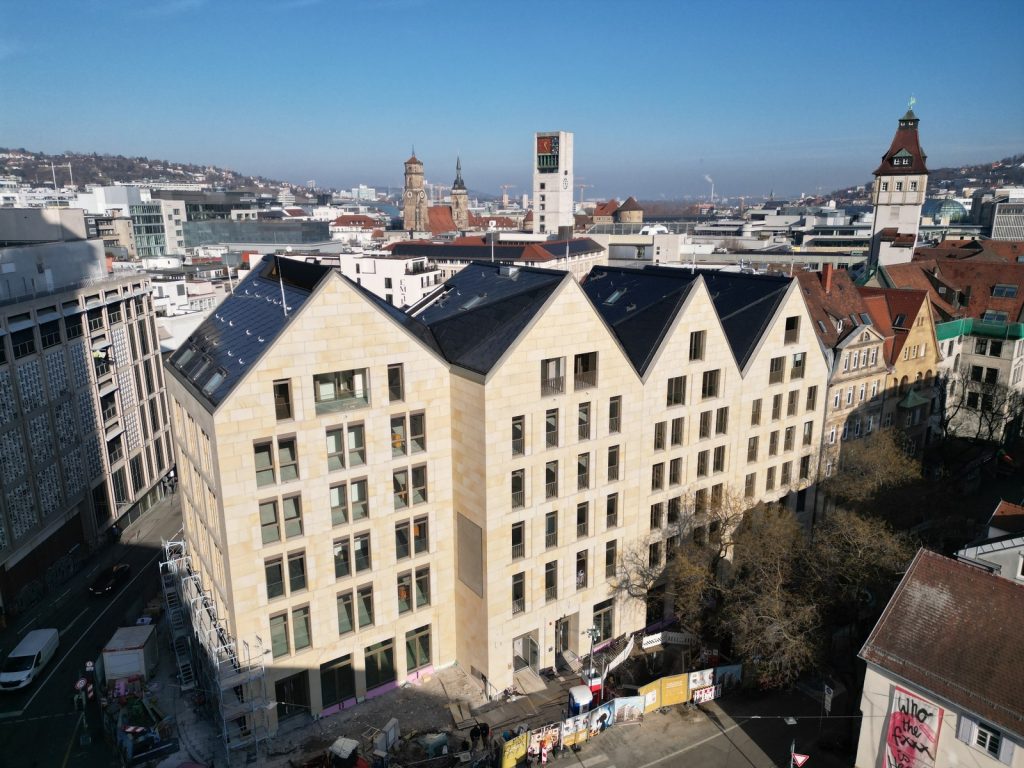
Four Gables, Stuttgart
The “Four Gables” project in Stuttgart demonstrates the complexity of modern roof architecture. The building features a highly complex roofscape with multiple pitched surfaces. At the same time, local regulations require photovoltaic systems on new buildings. The solution was a fully integrated solar roof design. A total of 39 roof sections were activated, without compromising the architectural concept. The result is a clean and cohesive roofscape that produces energy while maintaining design integrity. Explore more projects in our case studies.
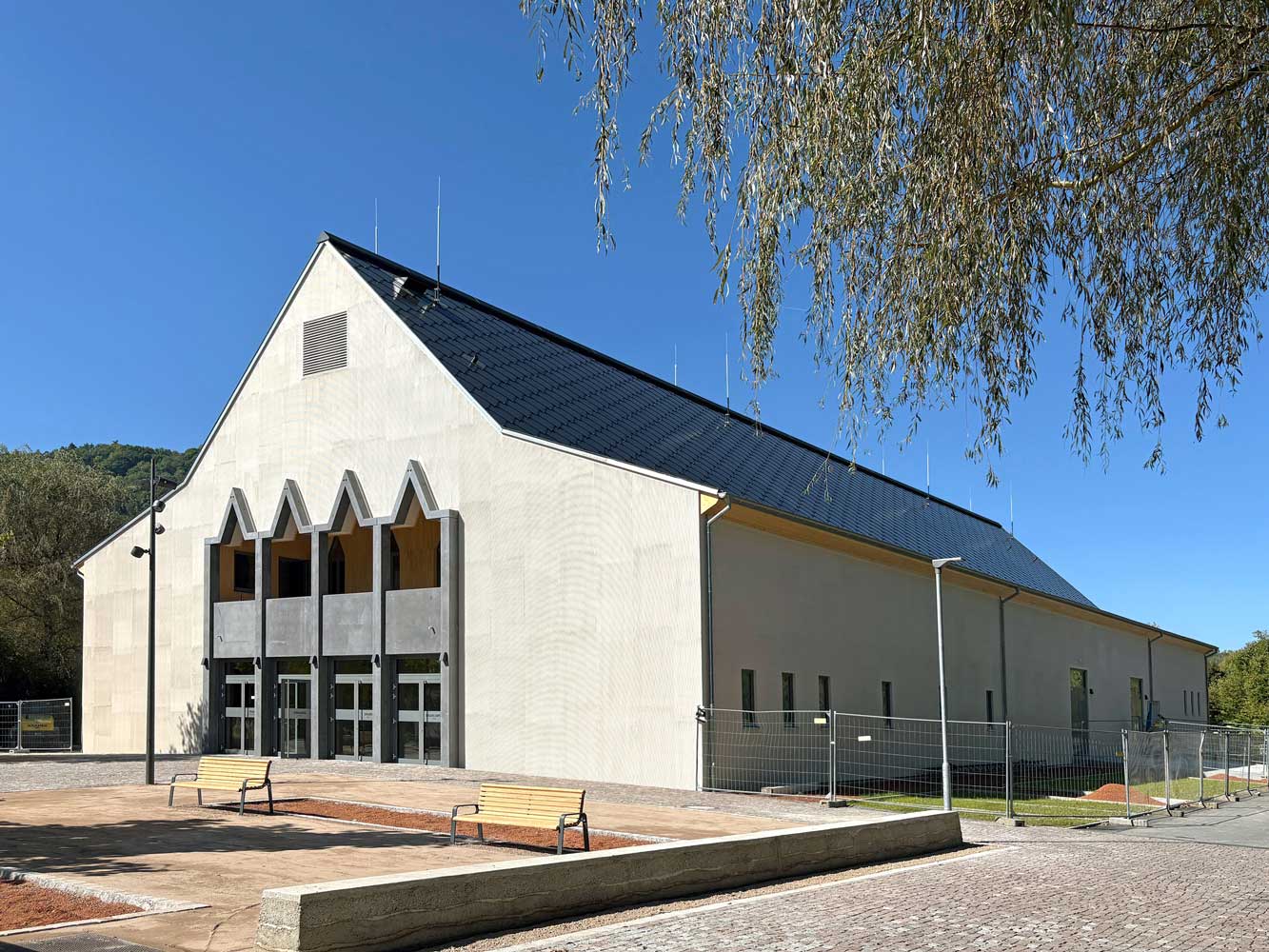
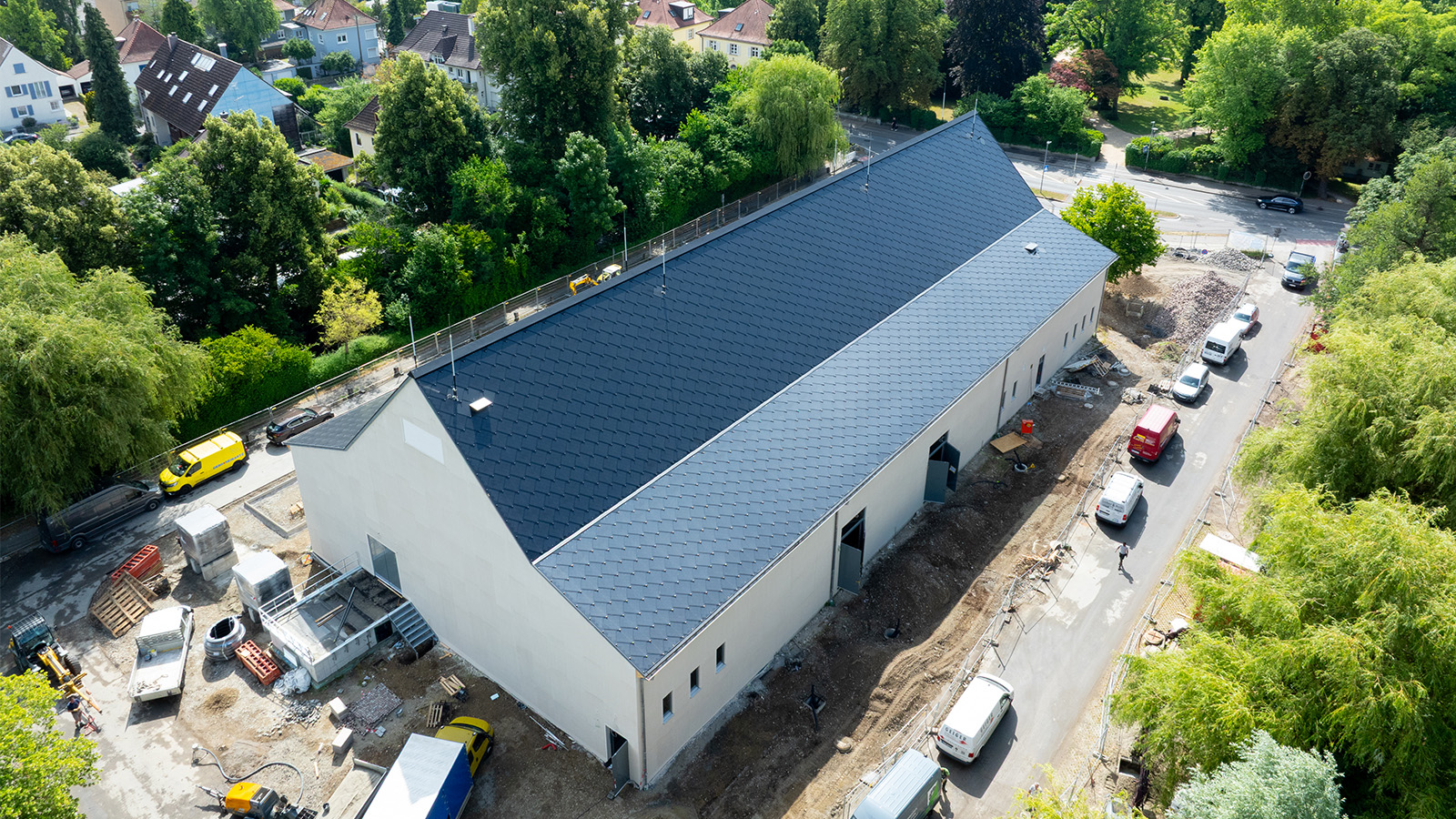
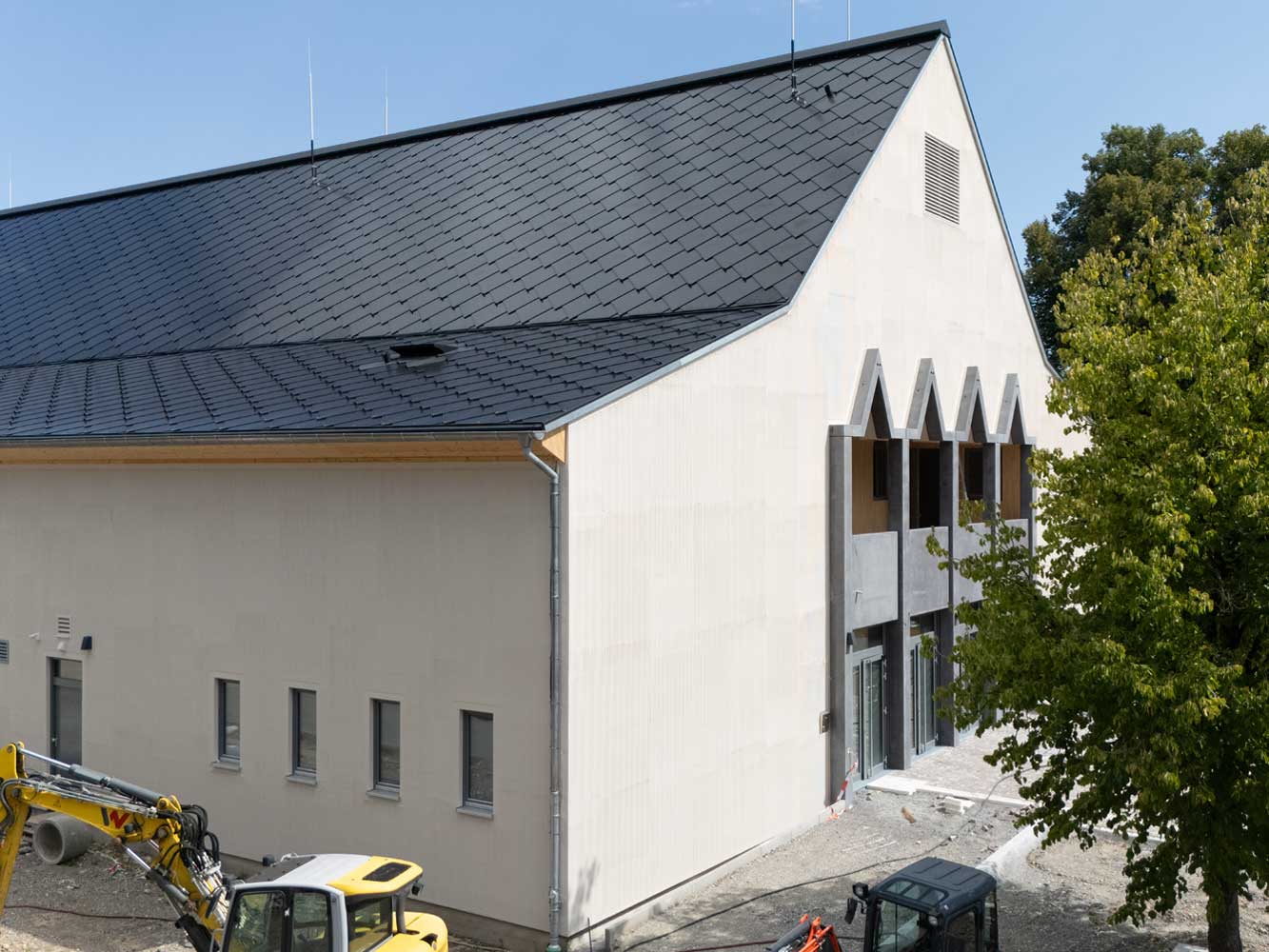
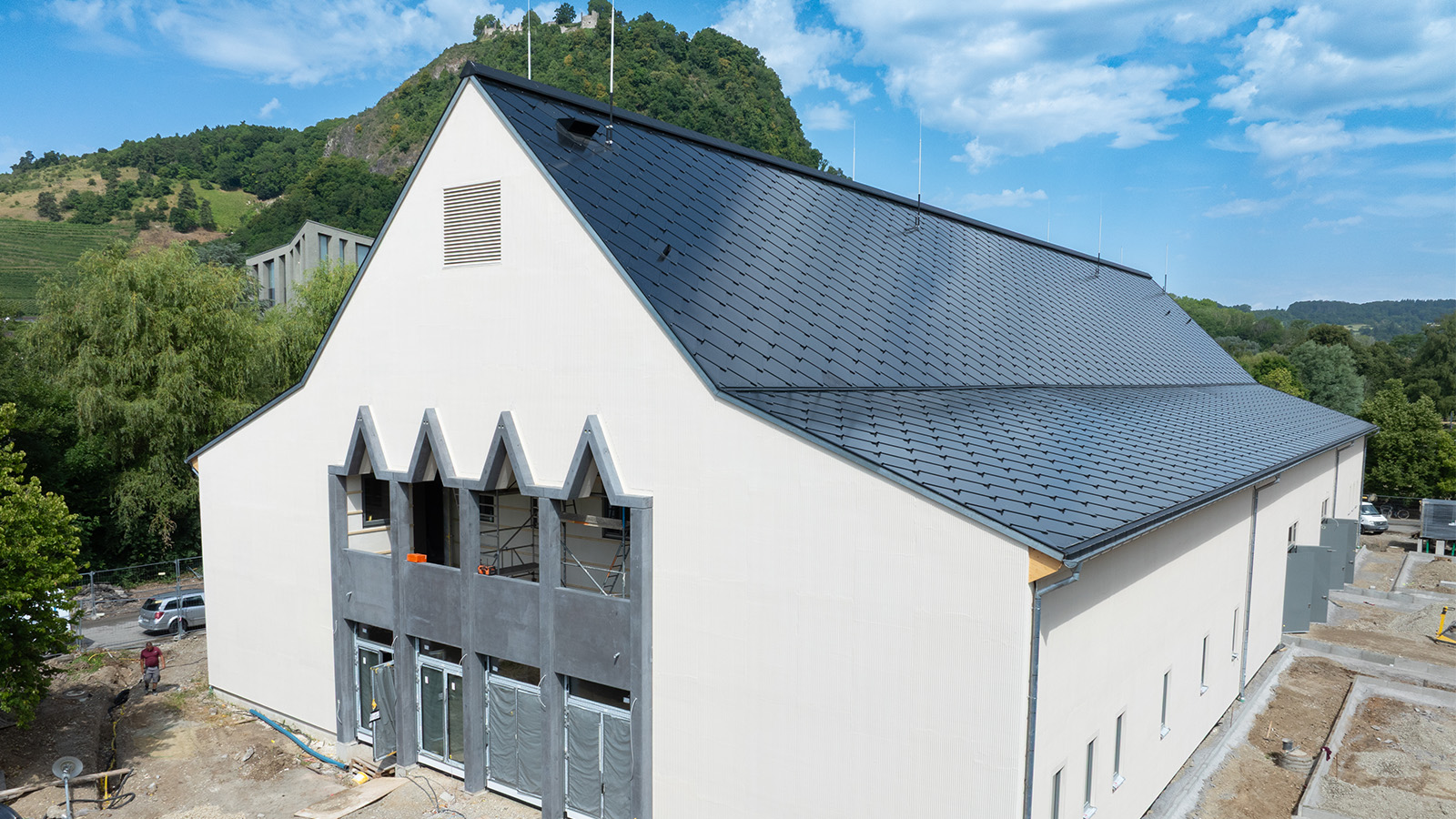
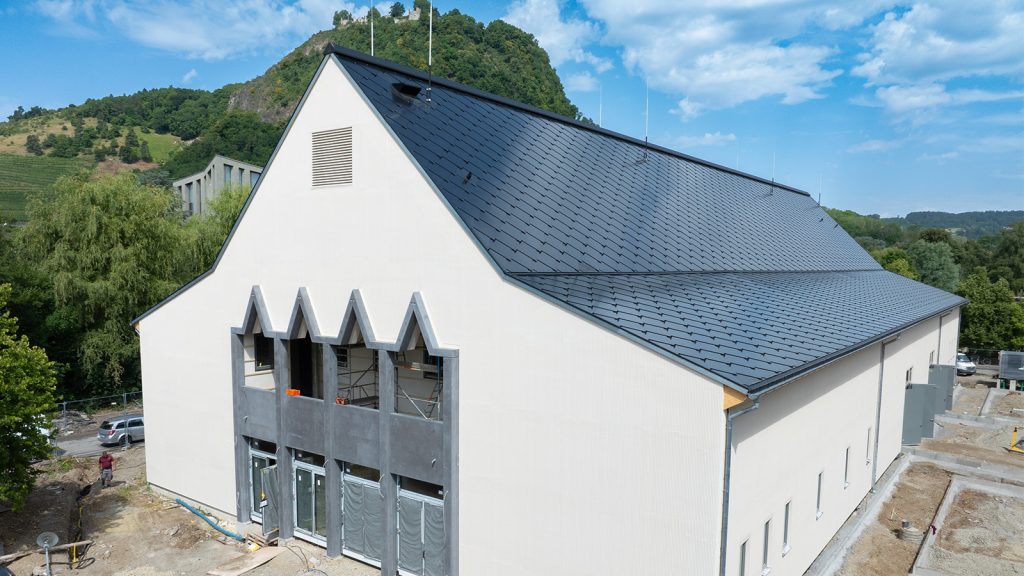
Scheffelhalle, Singen
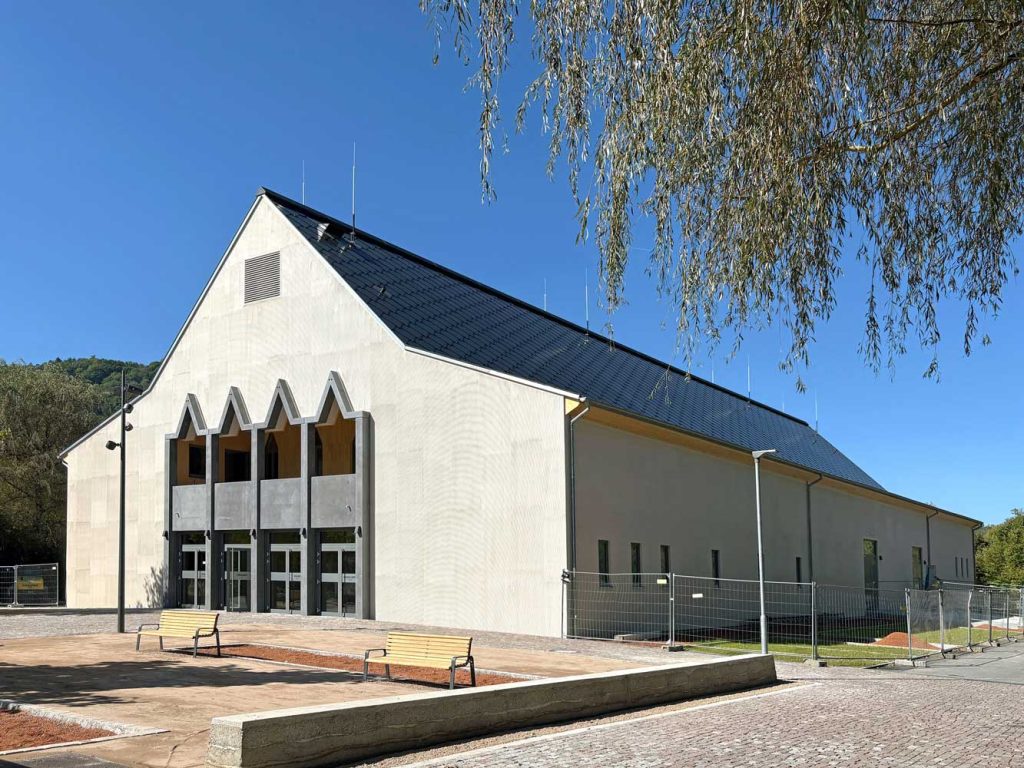
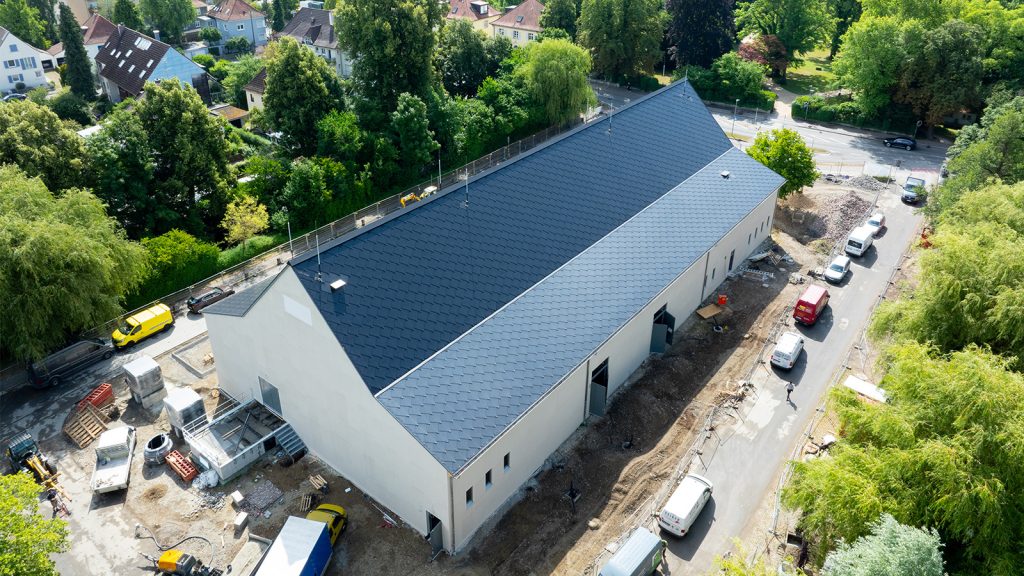
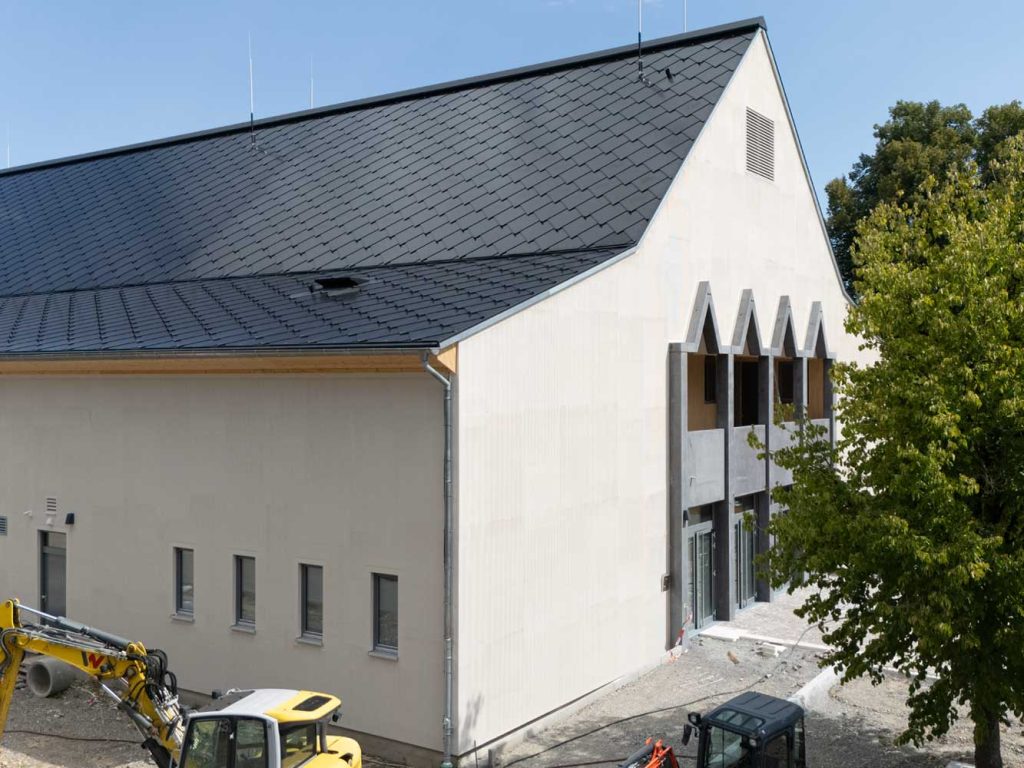
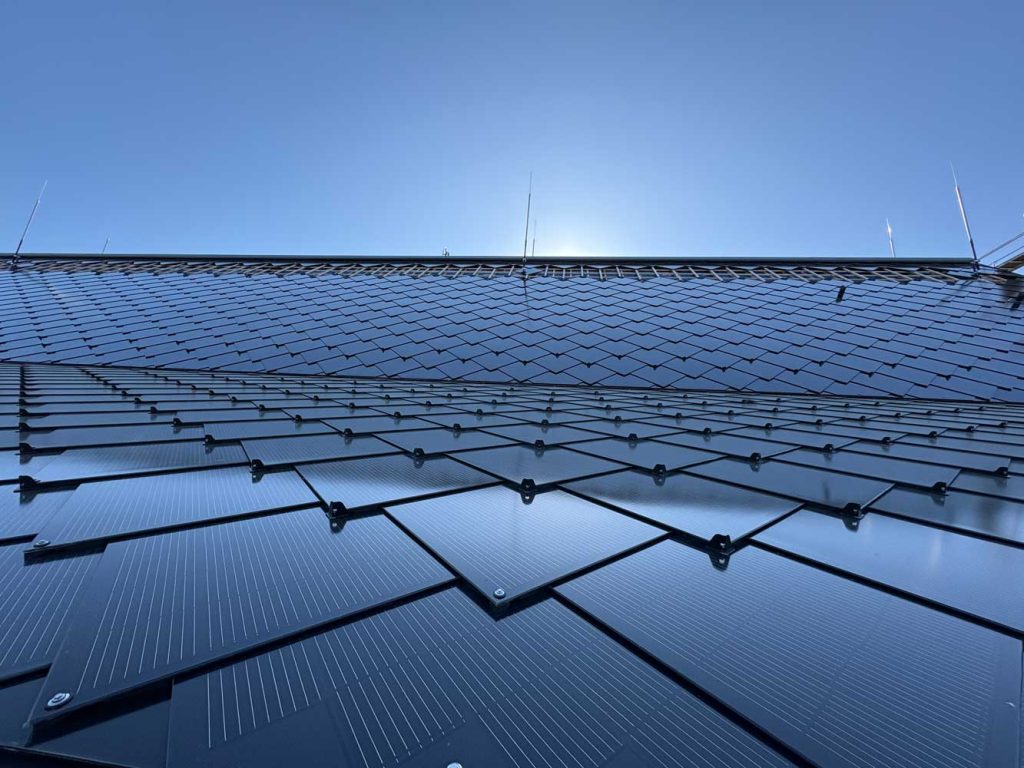
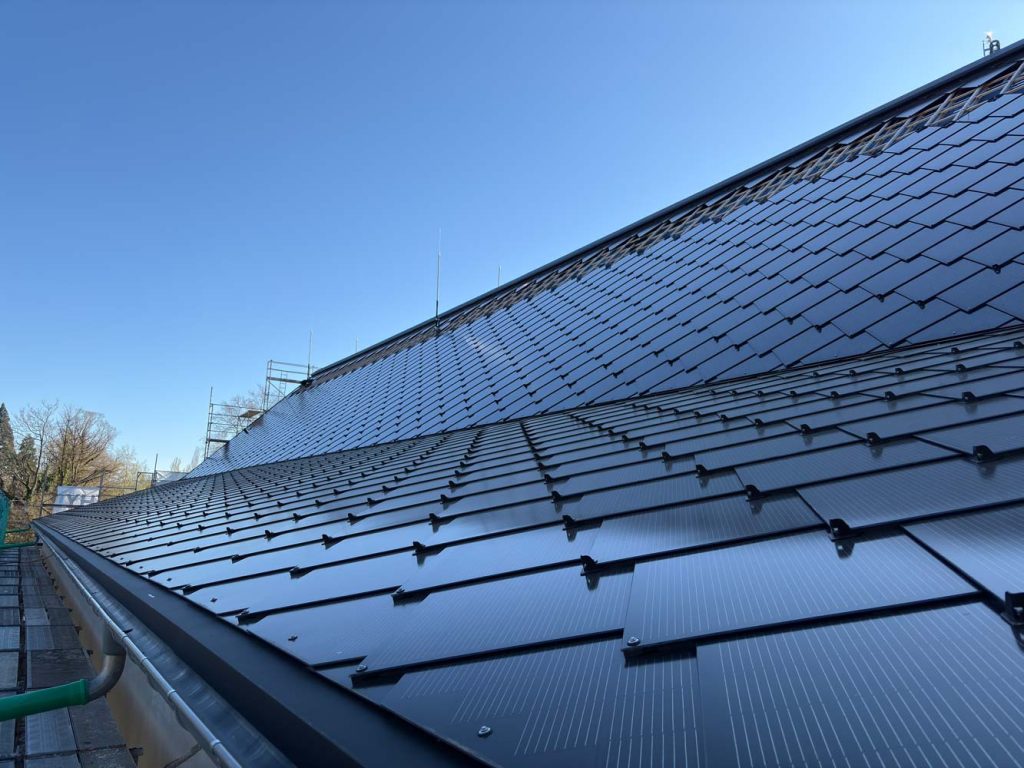
The Scheffelhalle project highlights the use of integrated photovoltaics in a sensitive historical context. The goal was clear: create contemporary architecture without visible technical installations.
The roof was designed as a fully integrated photovoltaic surface, resulting in approximately 1,800 m² of active shingle roof area. This project demonstrates how a BIPV roof can combine architectural quality and energy generation.
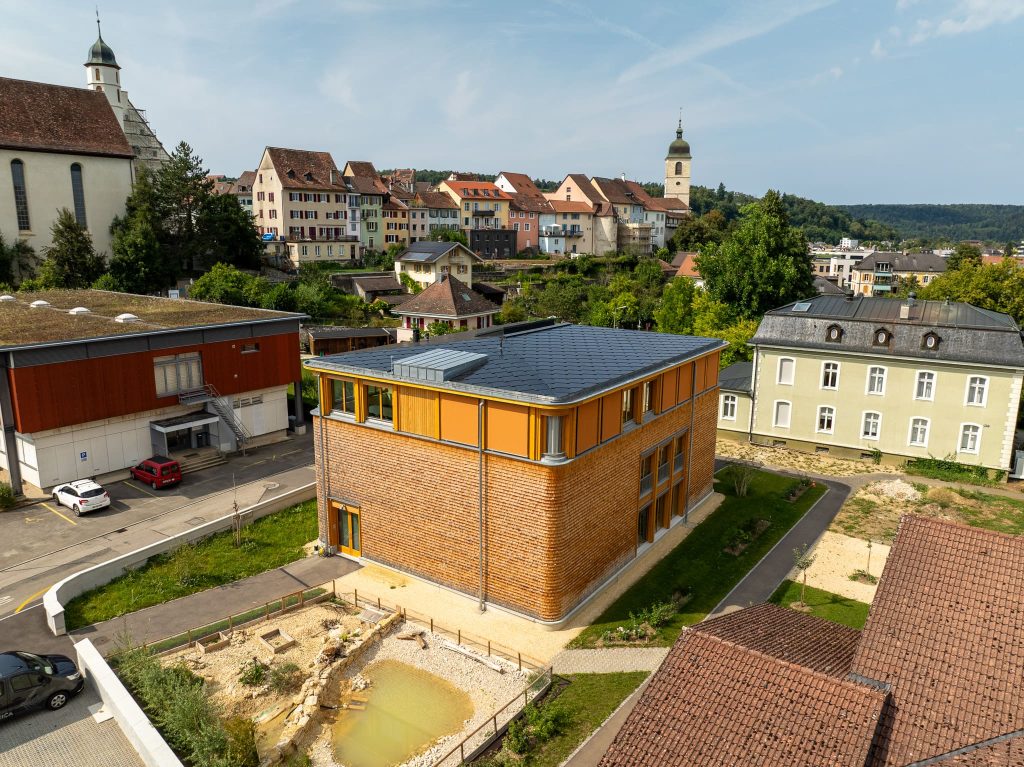
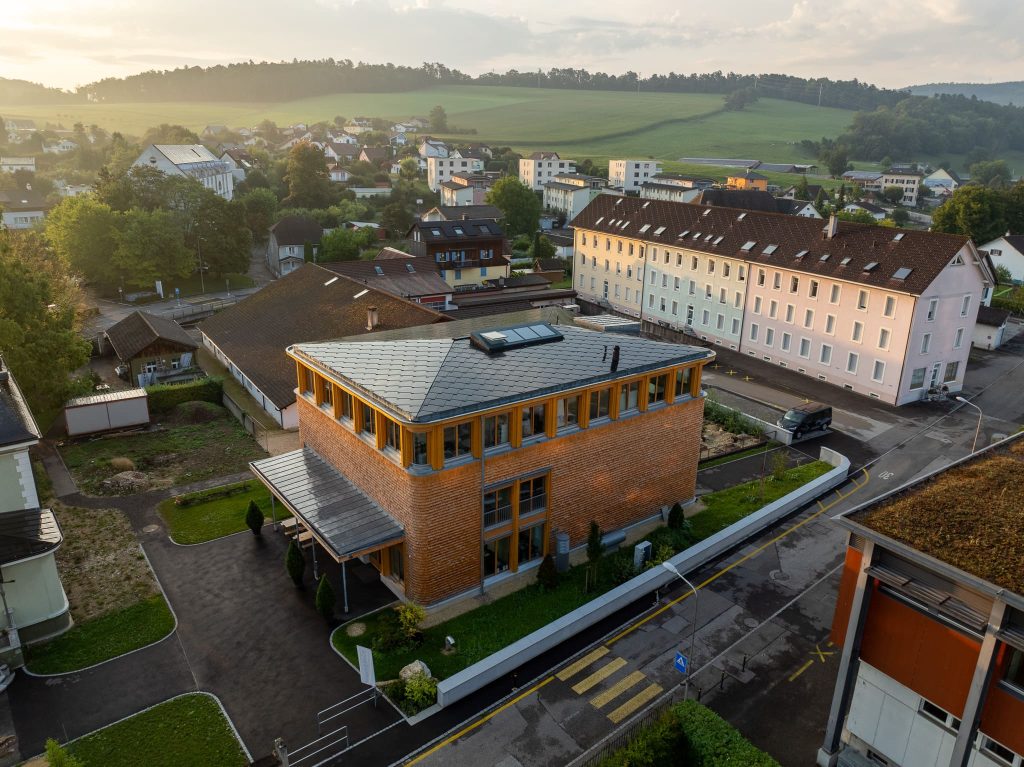
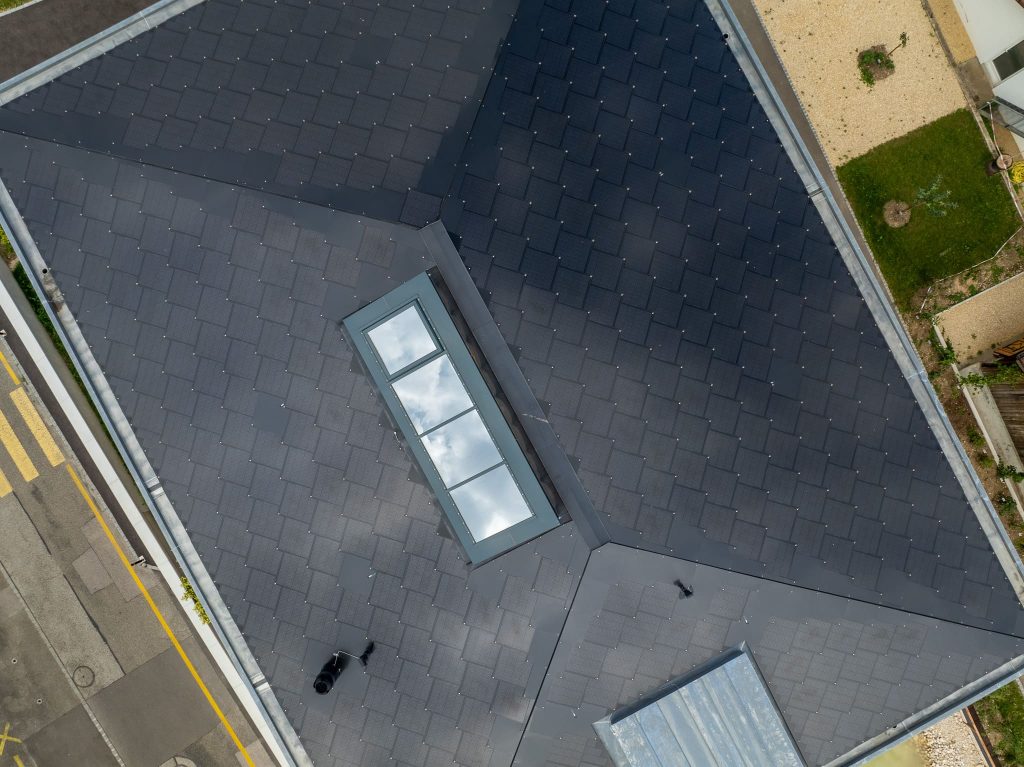
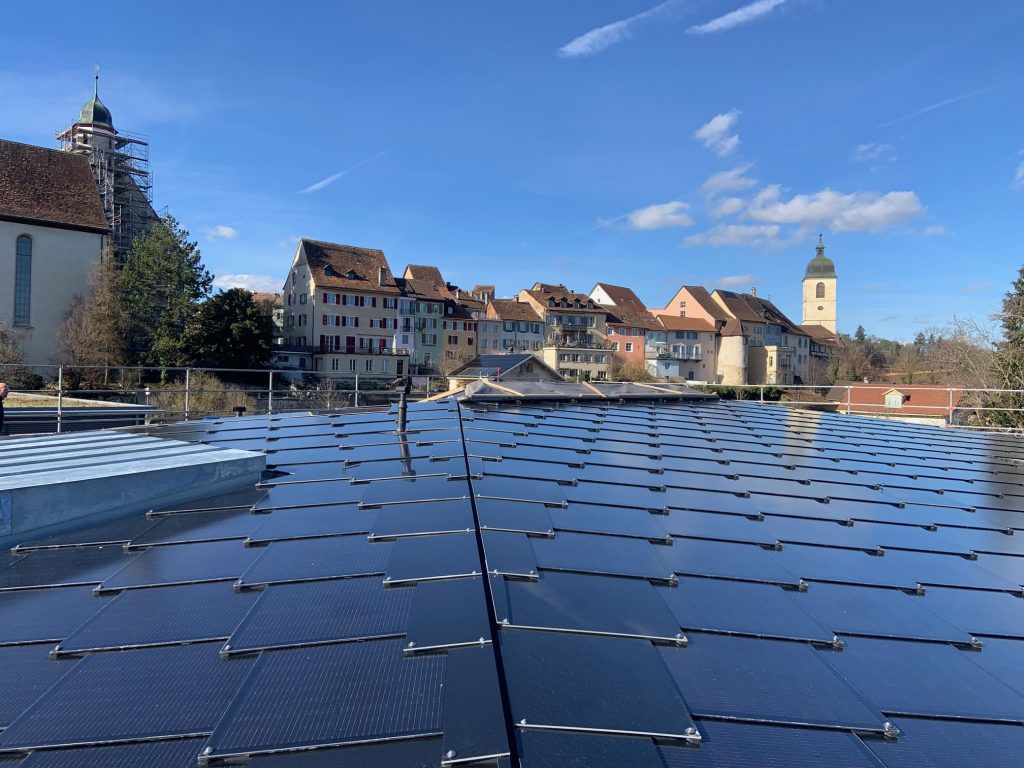
Jurassica, Porrentruy
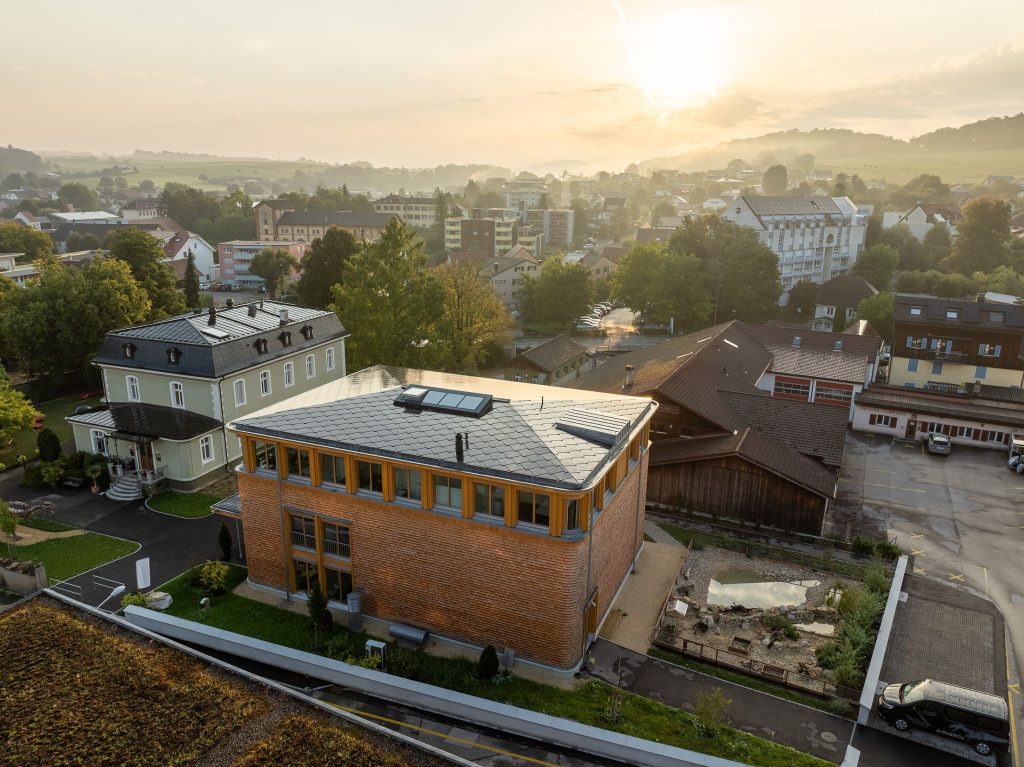
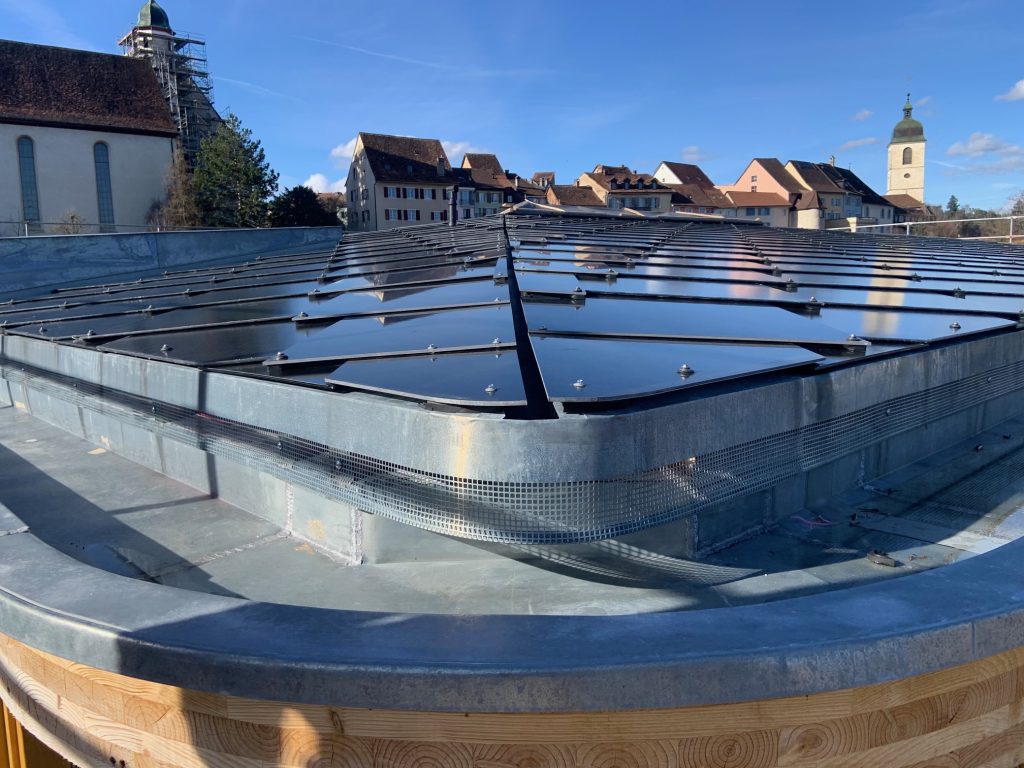
The Jurassica project in Switzerland presents another architectural challenge.
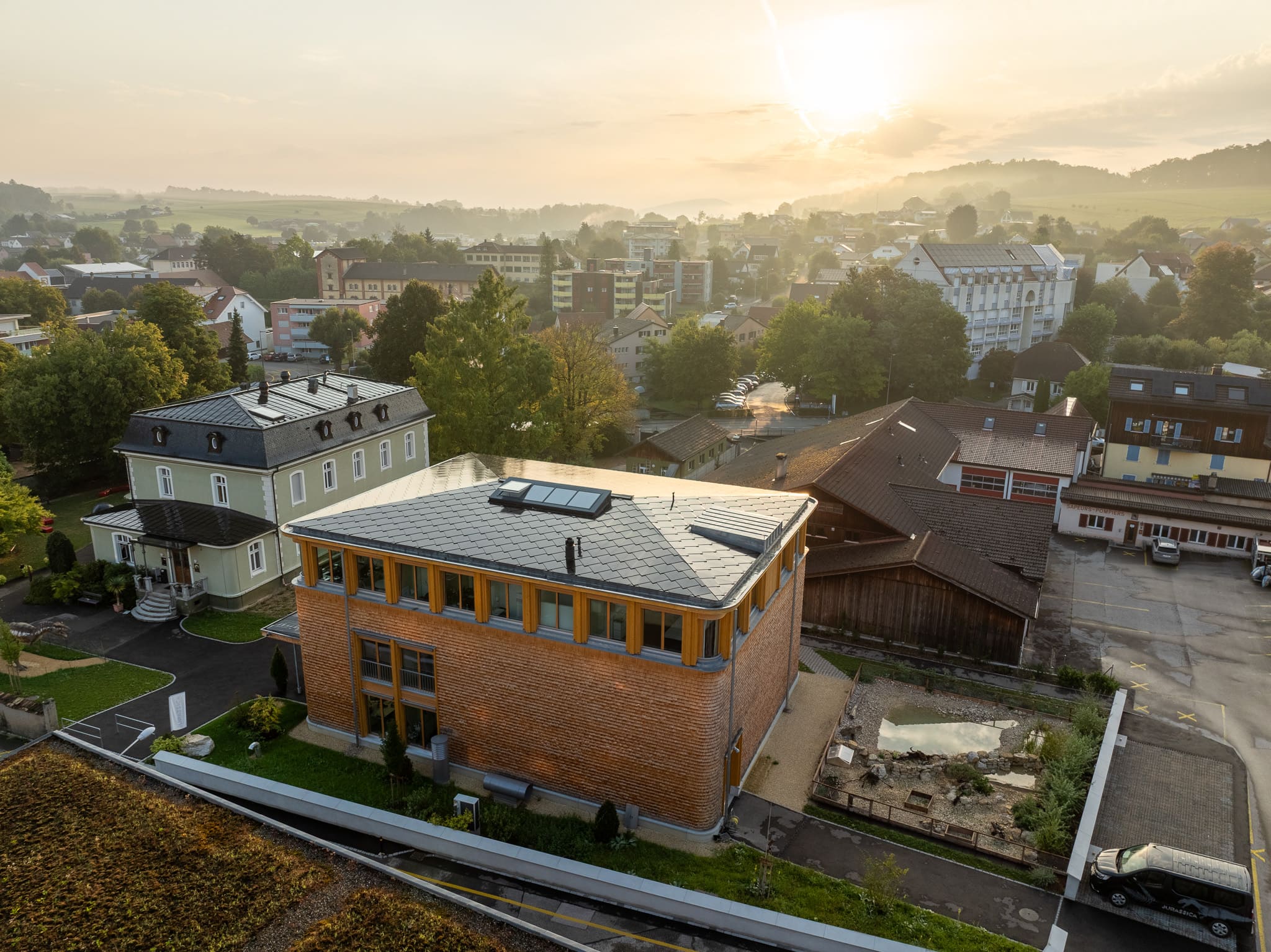
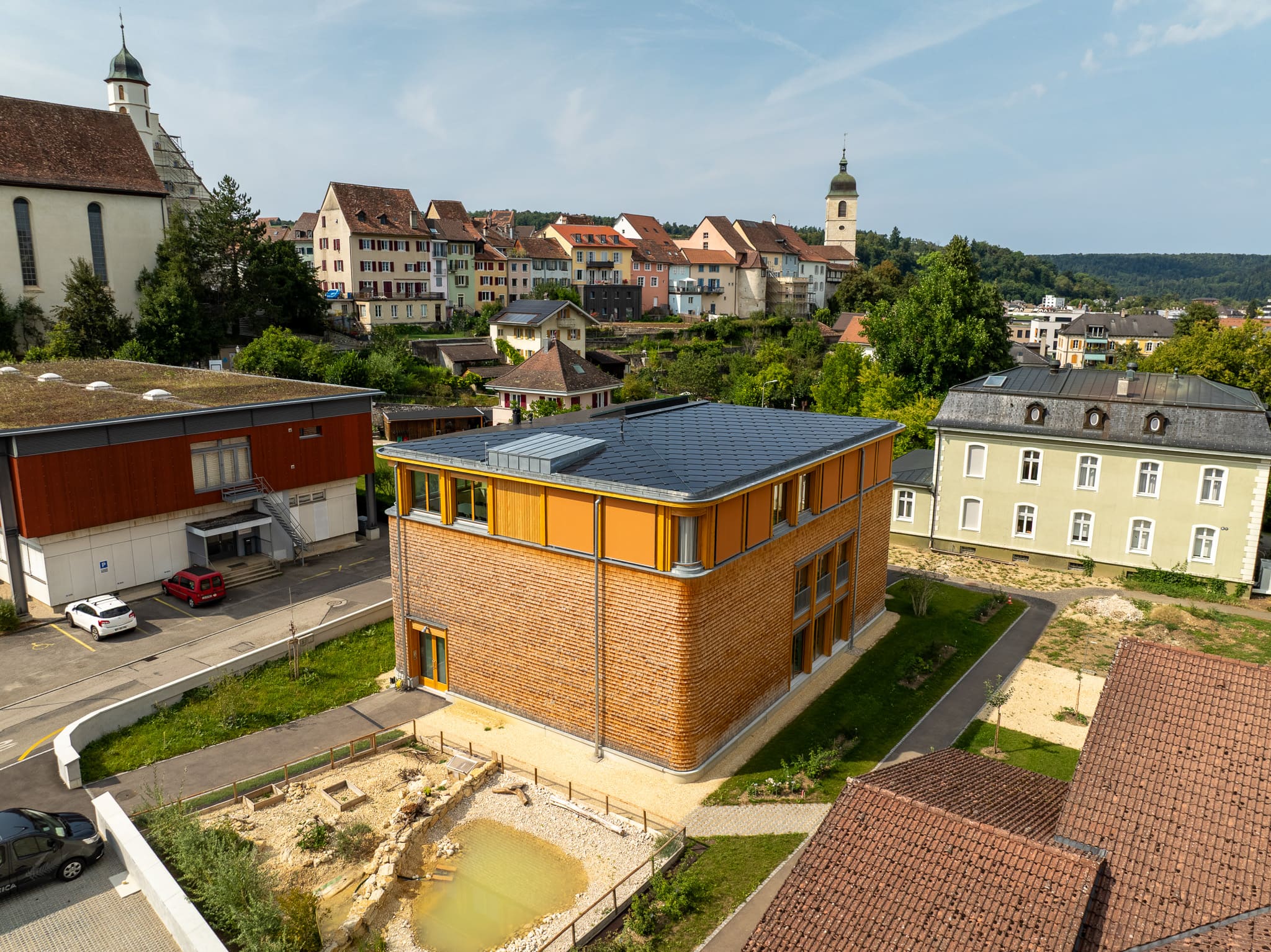
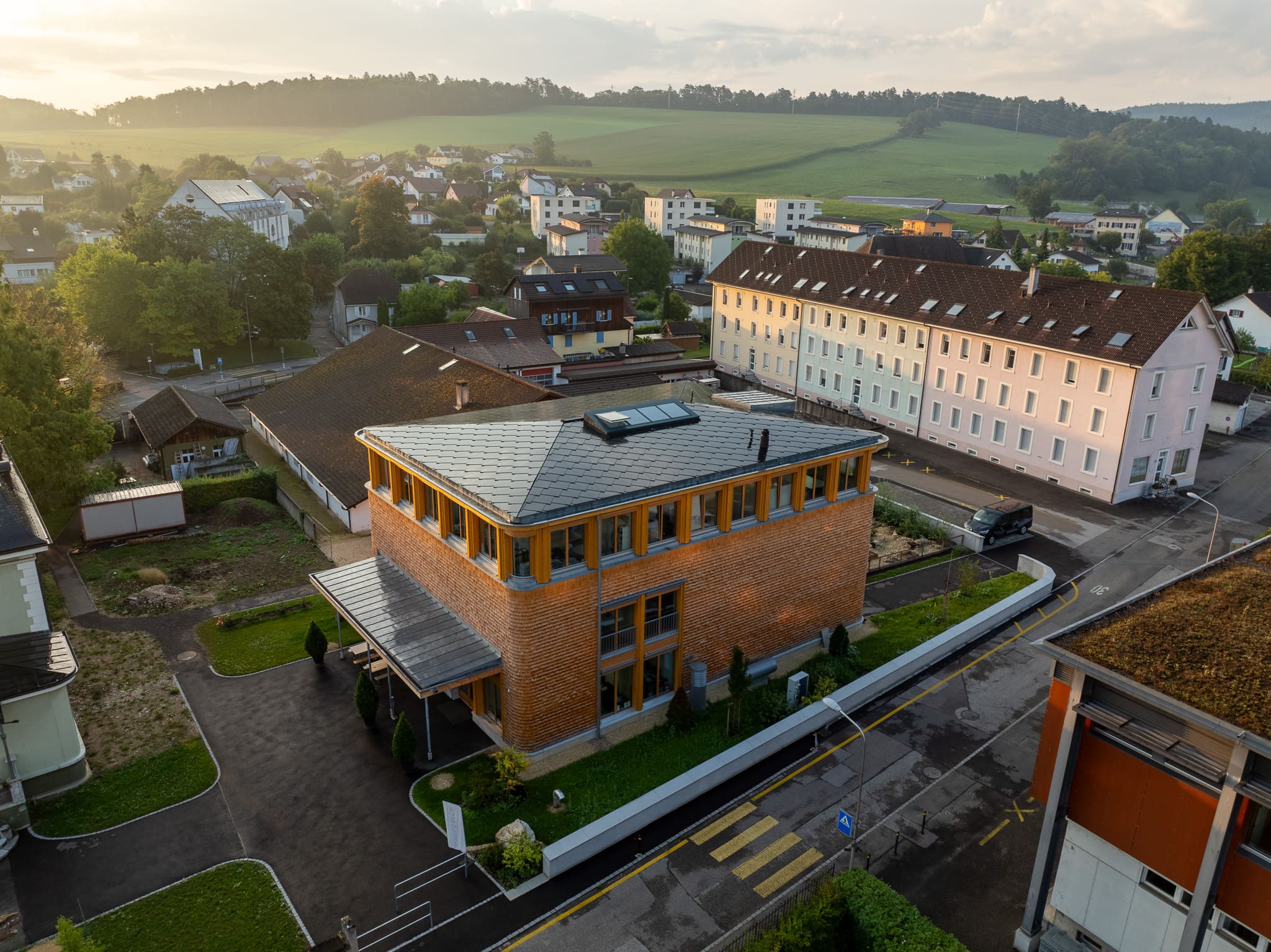
The building is located in a historical environment and features a very low roof pitch, which is often difficult for conventional solar panel systems. Thanks to full integration, the project achieved a homogeneous roof surface that generates energy without appearing as a technical installation.
Benefits of a Solar Roof with Integrated Photovoltaics
A solar roof with integrated photovoltaics offers several advantages over traditional solar panel systems:
- Clean, homogeneous roof surfaces
- Seamless integration into architecture
- Full use of the roof area for energy generation
- Reduced material layers through integration
- Greater design freedom for architects
Solar Roof vs Traditional Solar Panels
| Solar Roof | Aufdach-Photovoltaik |
|---|---|
| ⋅ Integrated into the roof structure | ⋅ Mounted on top of the roof |
| ⋅ Clean architectural appearance | ⋅ Visible panel grids |
| ⋅ Design-driven approach | ⋅ Technology-driven approach |
| ⋅ Part of the building envelope | ⋅ Additional system |
Economic Value Without Compromise
Beyond design, economic factors are also driving the adoption of integrated photovoltaics.
Regulation and ESG (environmental, social and governance)
Sustainability requirements and energy regulations are becoming stricter. Buildings are increasingly expected to generate their own energy.
Developer Expectations
Developers and investors demand both performance and design. A solar roof meets both criteria.
Long-Term Value
Buildings that generate energy tend to be more resilient and attractive in the long term. Integrated photovoltaics contribute to long-term asset value.
Conclusion: Solar Roofs Are the Future of Architecture
The energy transition is not just about technology — it is about design.
A solar roof with integrated photovoltaics demonstrates that energy production and architecture do not have to be in conflict. When photovoltaics are integrated from the start, they become part of the building — not an afterthought.
The key question for future architecture is no longer:
Whether buildings produce energy.
But:
How architecture and energy can be designed as one.
FAQ – Solar Roof & Integrated Photovoltaics
Is a solar roof more expensive than traditional solar panels?
A solar roof can have higher upfront costs. However, since it replaces parts of the roof structure, material and installation layers can be reduced. Architectural value is also a key factor.
Can integrated photovoltaics be used on low-pitch roofs?
Yes. Modern integrated photovoltaic systems can be applied on low-pitch roofs. Projects like Jurassica demonstrate this capability.
What types of buildings are suitable for solar roofs?
Solar roofs are ideal for:
- new constructions
- roof renovations
- architecturally demanding projects
- buildings in sensitive environments
Planning a Solar Roof?
Are you planning a project with integrated photovoltaics?
We support architects, developers, investors, and installers in designing and implementing solar roof solutions.
For more information about SunStyle’s solar roof, visit sunstyle.com
Power your interest in the future of solar roofing by following us:
Instagram @sunstyle_solar
Facebook @sunstylesolar
LinkedIn linkedin.com/company/sunstylesolar
Youtube @youtube channel